 FMJ Facilities Management magazine providing industry-specific intelligence to FM and property professionals

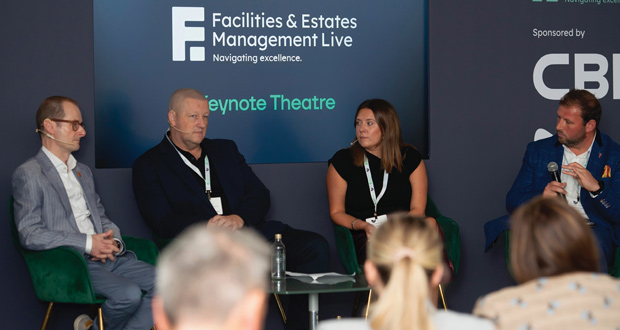
At Facilities & Estates Management Live, Wayne Young chaired a session that brought together leaders from the three main institutes that represent FM and the built environment. The panel discussed the key role played by the IWFM, RICS and CIBSE in dealing with the speed of change impacting the FM profession
PARTICIPANTS
- Wayne Young, FM for DB Cargo and Chair of the IWFM People Management SIG
- Emma Bellingham, Head of Academy at the IWFM
- Paul Bagust, Head of Property Standards RICS
- David Stevens, Director of Estates, Facilities and Capital Development, NHS Trust & Vice President & Facilities Management Group Chair, CIBSE
Introducing the discussion Wayne Young said associations and professional networks play a vital role in helping FMs adapt to advances in technology and enhancing the reputation of the FM role. Their purpose is to attract people into the sector, develop career talent, help them keep ahead of the technological curve, and demonstrate the value that FM delivers.
Emma Bellingham shared that the IWFM’s biggest challenge was the speed of change, and the level of skills and knowledge people are now expected to acquire. Paul Bagust of the RICS agreed, stressing that the profession must fight to remain relevant, and as it moves into what will be a period of significant change the professional associations must be ready to help FMs navigate these challenges. David Stevens of CIBSE warned that the speed of change, combined with the rapid pace of digitalisation means a significant skills and resource shortage could be round the corner.
CHALLENGES FOR THE PROFESSIONAL BODIES
Young asked the panel what they saw as the biggest issue for the institutes in supporting their communities?
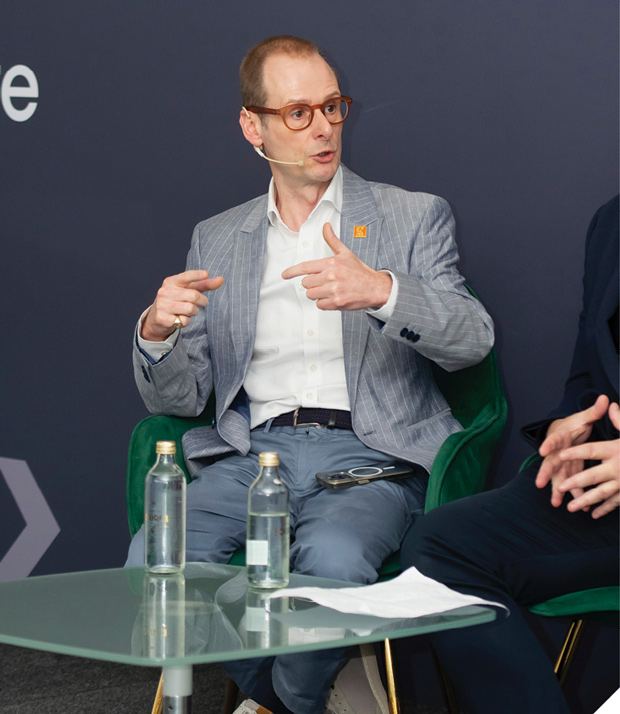 For CIBSE, reported Stevens, attracting membership is relatively easy, but maintaining engagement is more difficult, especially when members achieve chartered status. With institutions that have that Royal Charter, however, the focus isn’t just on the organisation as a membership body he explained, but on delivering for the public good and societal benefit. CIBSE exists to help promote that greater interest. He also remarked that FM doesn’t have the high profile of some of the other disciplines represented by CIBSE, which means there is not as clear a pathway for facilities management careers.
Bellingham agreed on the importance of keeping institute members engaged in supporting their continuing career progress and maintaining skills they’ve built throughout their career. The IWFM’s remit she said is to ensure individuals and members are continually learning by promoting a mindset of lifelong learning.
Like CIBSE, the RICS is not exclusively focused on FM professionals said Bagust, as it represents those with a wide variety of job roles in land, property, and construction, but its members have many of the same concerns. Also, with the average age of the chartered professional being over 50 it’s important to attract younger people into the profession.
He said: “We all understand the value of the built environment in terms of its environmental, sustainable, financial and social value, but I’m not sure we are articulating that as well as we could, so how do we ensure we are attractive and appealing to the best people?”
Bagust also noted that there is often a tendency to concentrate on the “shiny new things” such as AI, but he pointed out there are also a lot of aspects which are not changing. One of RICS primary purposes is about ethics and standards. He explained: “If you are a public interest organisation, that ethical piece is non-negotiable.”