 FMJ Facilities Management magazine providing industry-specific intelligence to FM and property professionals


BCC’s Jim Melvin
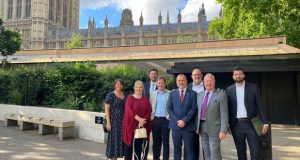
Key figures from across the cleaning and hygiene industry have held a high-level meeting in London to discuss working together on a strategy for the sector to achieve improved Government recognition.
The British Cleaning Council (BCC) invited a number of its association members and business leaders to join it and lobbying experts for an initial meeting to scope out the potential for sector organisations to develop a unified and aligned strategic approach.
Among the attendees were David Garcia, Jim Melvin and Simon Hollingbery of the BCC, David Wheadon of the National Carpet Cleaners Association (NCCA), Neil Spencer-Cook of the British Institute of Cleaning Science (BICSc), Paul Ashton of the Cleaning & Support Services Association (CSSA), Lorcan Mekitarian of the Cleaning & Hygiene Suppliers Association (CHSA), Kevin Meighan and Darren Marston of the Worshipful Company of Environmental Cleaners (WCEC).
The representatives discussed issues including:
- collective aims in terms of Government recognition and relationships
- the processes, requirements, attendees and commitment needed to succeed
- initial thoughts in terms of a uniform strategic approach
- key strategic points to interest and assist the Government to build relationships
- how marketing the project would be undertaken
- costs and contributions
- the leadership of this project.
Attendees enjoyed a lively and mostly aligned debate and unanimously agreed to resume the conversation in January.
The BCC’s Director leading on lobbying, Jim Melvin, said: “The fact is that, although we have made some progress, our sector is still not being prioritised or even listened to as much as we would like by the Government.
“We do not get anything like the recognition our industry should get as a £69 billion sector whose 1.49 million staff are regularly on the frontline keeping the public healthy, safe and well.
“Our skilled, technical and highly-professional industry is perfectly-placed to give expert advice to the Government in a number of areas, yet we are simply overlooked.
“I am very pleased that we were able to get round the table with key leaders in the industry to begin initial discussions on our future strategy for the industry. We are looking to find key priority areas where we can work together to achieve progress for the industry as a whole.
“By combining together, we can offer an overall strategy that can tangibly evidence our professionalism to the Government and fully demonstrate that our expertise is invaluable.”
As part of the discussion, the meeting was updated on the extensive and ongoing lobbying programme led by the BCC.
The steps taken since April this year include:
- Positive meetings with MPs Linsey Farnsworth, Jim Dickson and Luke Charters, as well as with William Cook of the UK Health Security Agency (UKHSA) and Sebastian Rees of the Institute For Public Policy Research (IPPR).
- Contact has been made or is in the process of being made to the UK Resilience Academy, the Royal Society for Public Health (RSPH), the Healthy Places and AMR All-Party Parliamentary Groups, Assist FM and Dr Beccy Cooper MP.
- The BCC published the Strategic Framework For Achieving Cleanliness And Hygiene in Public Environments, which gives systematic advice on clear and effective cleaning standards across workplaces and public spaces in the UK. The document was shared widely with MPs, Government ministers and key bodies.
- The BCC is developing a pilot project which will see the framework implemented in one or more schools, with evidence being collected to demonstrate the impact of measures on reducing both absence rates and the spread of infection to families in the community.
Wednesday 14 January at 11:00am
Building Management Systems (BMS) have long been used to control the heart of a building – monitoring and controlling its essential systems such as lighting, ventilation, heating and air conditioning. Facilities Managers want the best visibility to help detect and deal with concerns before they become issues.
This webinar brings together the experts from energy network provider, E.ON along with FM thought leaders to discuss moving from a reactive service to a proactive service. By identifying energy issues early and automatically, instead of occupants reporting issues, then potential faults can be identified early and remedied. The BMS does this before the problem occurs by using smart alerting and EMC support services.
Panel:
- Sara Bean: Editor FMJ (Facilities Management Journal)
- Nick Westlake: Energy and Service Delivery Manager at E.ON Control Solutions
- Sunil Shah, the author of IWFM’s Energy Management Good Practice Guide and MD of Acclaro Advisory
- David Cermak, Regional Facilities Manager for David Lloyd Clubs
To register for the webinar which will be taking place on 14 January 2026 at 11:00am click here.