 FMJ Facilities Management magazine providing industry-specific intelligence to FM and property professionals

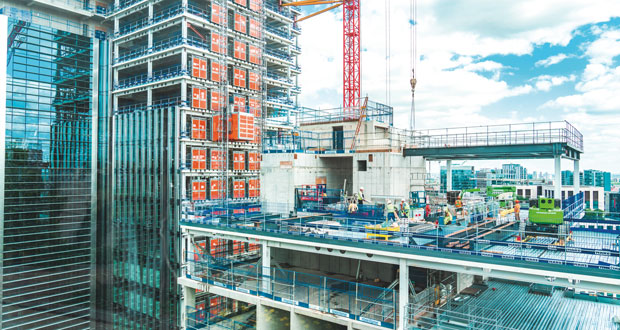
UK construction mergers and acquisitions specialist, Bradley Lay, is calling for immediate action as energy shock, supply chain disruption and investment slowdown risk another wave of insolvencies.
 Bradley Lay, Co-founder of Peak Capital Group and Principal of a UK-based family office, has issued a stark warning to construction business owners, urging immediate action as the ongoing conflict involving Iran continues to destabilise global energy markets and place further strain on an already fragile UK construction sector.
Lay has cautioned that the war is likely to trigger a new wave of financial distress, project disruption and business failures unless firms act decisively to protect margins and manage risk.
Lay, who is an active investor and advisor in the construction sector believes the current geopolitical situation could prove to be one of the most significant external shocks the industry has faced in recent years.
He said: “The UK construction sector has already been through a sustained period of pressure following Brexit, Covid and regulatory disruption through the Building Safety Regulator process. Many business owners felt that 2026 would finally bring some stability. Unfortunately, the reality is quite the opposite. The Iran conflict is introducing another layer of volatility that could push already stretched businesses beyond breaking point.”
He added: “On March 12, the International Energy Agency reported that the war was creating the largest supply disruption in the history of the global oil market. That alone should be setting alarm bells ringing for anyone operating within construction. This is not a contained issue, it feeds directly into energy prices, material costs, programme delays and ultimately whether projects remain commercially viable.”
Lay warns that rising oil and gas prices are already feeding through the system, increasing costs at every stage of the construction lifecycle, from manufacturing to transportation and on-site operations. With Brent crude rising sharply and wholesale gas prices significantly elevated compared to pre-war levels, contractors are now facing compounded cost pressures at a time when margins are already thin.
Lay said: “The construction sector is uniquely exposed to energy inflation because it gets hit multiple times. You have factory energy for producing materials, fuel for transporting those materials and then energy consumption on site. When all three increase simultaneously, the financial impact is severe and immediate.”
He further explained that global supply chain disruption linked to the conflict is expected to exacerbate delays across key packages, particularly those reliant on international sourcing. Steel, aluminium systems, mechanical and electrical equipment, façade components and specialist materials are all expected to face extended lead times, increasing the risk of project overruns and contractual disputes.
“The Office for National Statistics has already reported that UK construction output fell for the fourth consecutive three-month period leading into 2026, even before the full impact of this conflict is felt,” Lay said. “What we are now facing is a compounding effect, where existing delays are intensified by new supply chain shocks. This is how projects move from being challenging to unviable.”
Lay also highlighted that material cost inflation, which had already been rising prior to the conflict, is now likely to accelerate further. Energy-intensive materials such as bricks, cement, plasterboard, glass, asphalt and insulation are expected to see significant price increases as production costs rise globally.
At the same time, he warned that labour pressures will continue to intensify, not necessarily through immediate wage inflation but through declining productivity, extended project timelines and increased reliance on overtime and subcontractor premiums.
He said: “The Construction Industry Training Board has already identified a requirement for tens of thousands of additional workers each year just to meet demand. When projects are delayed and programmes stretch, productivity drops and costs rise indirectly. Businesses often underestimate how damaging this can be to cash flow.”
Lay also cautioned that investor confidence may weaken as uncertainty persists, particularly within private development. Higher energy prices increase inflationary risk, complicate interest rate decisions and make both lenders and developers more cautious.
He said: “Public infrastructure projects are likely to remain more resilient because they are government-backed and long-term in nature, however, private housing and commercial developments are far more sensitive to shifts in confidence and borrowing costs. That is where we are likely to see hesitation, delays or cancellations.”
Despite the severity of the situation, Lay emphasised that construction business owners are not powerless and must take proactive steps to protect their operations.
“This is not a time for complacency or short-term thinking,” he said. “Business owners need to be planning now, not reacting later. We have already seen a significant number of construction companies enter liquidation this year, and the common theme is a failure to adapt quickly enough to changing conditions.”
He continued: “Where possible, businesses should be securing materials early and ensuring supply chain certainty. If direct procurement is not feasible, they should be working closely with main contractors and employers to protect their position. Equally, when selecting subcontractors, the focus should not be on the lowest price, but on financial stability, operational discipline and supply chain resilience.”
Lay concluded with a clear warning to the sector: “The contractors who protect their margins in 2026 will not be the cheapest, they will be the most prepared. In an environment defined by geopolitical instability and economic uncertainty, resilience becomes your competitive advantage. Those who fail to recognise that reality risk becoming part of the growing number of insolvencies we are already seeing across the industry.”
FMJ and Watco Webinar: Meeting compliance in a new culture of accountability
From January 2026, the Building Safety Regulator (BSR) formally separated from the Health and Safety Executive (HSE). Created under the Building Safety Act 2022 in response to the Grenfell Tower tragedy, the BSR is designed to raise safety standards across the built environment and introduce a stronger culture of accountability, transparency, and proactive risk management.
This shift places facilities managers in a more strategic safety assurance role – far beyond routine maintenance.
FMJ and Watco are hosting a webinar on 22 April at 11:00am to explore what this new regulatory landscape means for FMs. To register for the webinar click here.
Can’t make it no problem…
Simply register above and after the webinar has been broadcast, we will send you a link to watch the recording.