 FMJ Facilities Management magazine providing industry-specific intelligence to FM and property professionals

TRAINING AND DEVELOPMENT
When attracting new people into the FM industry, how can these associations then help improve their member’s prospects for a successful career in FM? asked Young. “And how do we maintain that engagement with ongoing and professional development opportunities?”
As a learning and development practitioner, Bellingham feels it is important to offer a variety of assessment methodologies. Whereas traditionally, members may opt for formal qualifications and assessment reviews, a range of approaches for lifelong learning are now available. “Think about the need to make sure that we’re recognising the knowledge experience of our membership,” she said.
For Stephens, the work that CIBSE chartered members do to maintain competencies should be seen as a continuation of their academic studies. “It’s not simply about completing the degree you need for engineering, you then do the CPD (Continuous Professional Development). That golden thread of information is now paramount, and it is going to bleed through everything that we do within the built environment.”
Bagust also stressed the importance of delivering fundamental core skills, from understanding client’s needs, ensuring best practices in deploying contracts and helping meet sustainability goals, all areas that help demonstrate their value.
NEW TECHNOLOGY
With the influx on new technology to the sector, Young wondered how do we ensure that the content of the training programmes provided by the professional bodies is relevant for the next generation?
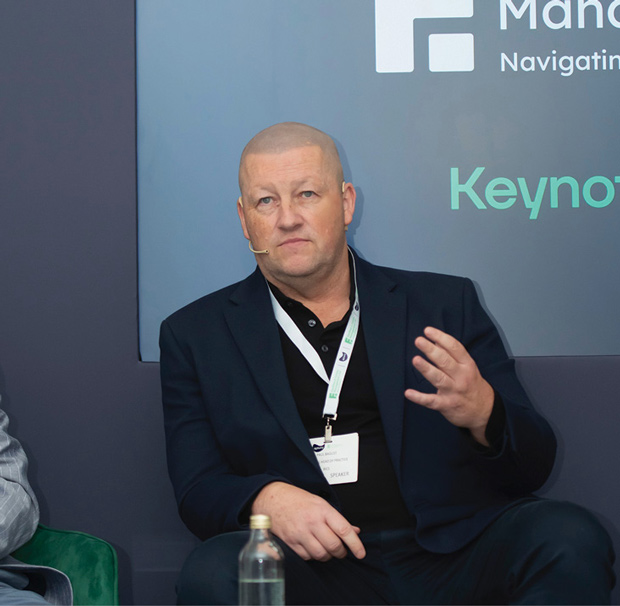 Paul Bagust explained that RICS’ new AI standard which takes effect on 9 March 2026, sets out mandatory requirements and best practice expectations for RICS members. It aims to ensure AI tools are used ethically, transparently, and with professional oversight. He added that the professional bodies probably don’t collaborate enough and AI might motivate CIBSE, RICS and IWFM to come together to determine common areas of interest, for instance the adoption of data tools to measure occupancy and FM services demands.
Stevens added that the main advantage of AI is in improving productivity, and as the discussion had already explored the skills shortage, using new tech means saving resources, not reducing efficiently. He said: “Anything like AI that can save that time, streamline delivery and maintain more efficient facilities should be embraced.”
According to Bellingham the main concerns for the IWFM are from a tech, technology and AI perspective, and the need to ensure these skills include a sustainability focus to ensure the right outcomes. She explained that IWFM’s bite-sized training consists of e-learning modules that cover topics like technology, sustainability, and strategic thinking. She added: “We’re trying to drive innovation and reflect some of the current projects and work being done by FM professionals in the field.”
Stevens added that the engineering skills gap that CIBSE is dealing with is multi-faceted, which includes skilling up the upcoming generation of workers. CIBSE has implemented a STEM outreach programme and is engaging at school level to actively promote what the built environment is and how an engineering career fits into that space.
He added: “We’re also working with universities to encourage the continual teaching of building services, facilities and related degrees. I think for me, what is essential is that it has got to be all about competency, how you become competent and how you maintain your competency.”
IDEAL WORLD
Bringing the discussion to a close Young asked the panel: “If I give you a magic button for your institute to do one thing to support the sector what would it be?”
Bellingham’s wish is to allow people to find learning easier, and to take away the fear of learning. She disclosed that there are a lot of people who feel trepidatious about seeking a new qualification, beginning a new course, or even just learning a new skill. But she added, once people start the process, begin learning and take those skills back into their organisation, the fear goes away. “But I think ideally, we would take away that first step of ‘I don’t think I can do this’ and encourage people to take that step forwards.”
Bagust reiterated that the ongoing issue is that people don’t understand the opportunities there are available for those who choose a career in built environment. For him a huge shift would be making it much less about ‘falling into FM’ and more about making FM a conscious career choice.
“This is a brilliant professional environment and an absolutely outstanding profession with outstanding people doing great work. To get the value of that profession in a wider context through to a wider audience would be a huge win.”
Building on that thought Stevens added his wish would be to make the facilities management profession more visible, ensuring more people knew what facilities is and why working in facilities operations and the built environment is a career of choice.
Summing up the discussion Young said: “What we’ve heard is pretty clear, the FM profession is at a crossroads. Skills, technology, finance, demographics, all present challenges, but they’re also creating opportunities.”
Professional associations are all about being support systems he stressed, with their role being to collaborate with members by offering knowledge, training and encouraging members to make creative changes. They are not just about talking properties but preparing FM professionals to deliver real impact in an increasingly complex world.
He concluded: “If there’s one takeaway it is that the future of the professional associations and the future of FM, will depend on how well we invest in people, developing their talent, raising innovation and ensuring that the profession continues to be a central part of the success of every organisation.”