 FMJ Facilities Management magazine providing industry-specific intelligence to FM and property professionals

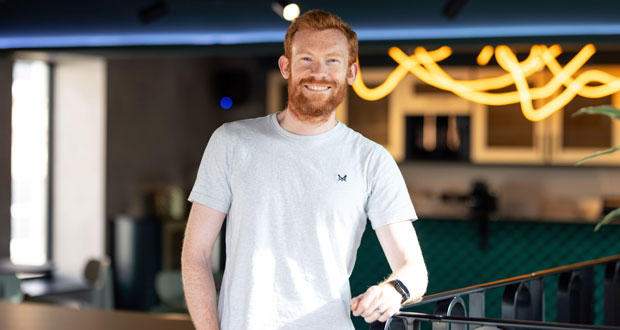
The Bath-based B Corp-certified workplace design and fit-out specialist has cut its emissions while increasing its headcount and moving into larger headquarters, underscoring how operational efficiency and growth can go hand in hand.
Interaction has been a climate positive business for the last three years which means it removes more CO2 from the atmosphere annually than it puts in.
In 2024/25, Interaction’s total operational carbon footprint was 124,664 kgCO2 – a 31 per cent reduction from 180,376 kgCO2 in 2022. This reduction in emissions follows Interaction’s move to larger headquarters at The Quarter in Bath in October 2023.
The firm’s carbon footprint per square metre of office space fell from 370 kgCO2 in 2022 to 224 in 2024, which represents a 39.5 per cent reduction. The firm’s current base at The Quarter spans 557 square metres in total while its former premises totalled 352 square metres.
Interaction has also cut its carbon footprint per employee by 5.5 per cent, from 2,400 kgCO2 in 2022 to 2,266 kgCO2 in 2024. The firm’s workforce has grown from 54 employees in 2022 to 60 employees today.
The figures are revealed in the firm’s latest annual sustainability report and have been independently verified by Climate Essentials. Its publication follows a string of major office project wins by Interaction with landlords, flex space operators and law firms across the UK.
Mike Borne, Head of Operations at Interaction, said: “We recognise that every aspect of our business – from the running of our office space to our on-site operations – has an impact on carbon emissions.
“We’ve now completed our fourth year carbon business footprint assessment and continue to offset 110 per cent of our operational emissions, reaffirming our commitment to going beyond carbon neutrality.
“Achieving a 31 per cent reduction in our total carbon emissions reflects the positive impact of our move to a more energy-efficient office space and our continued efforts to streamline operations and reduce emissions at the source.
“There’s a perception that growth inevitably means higher emissions. Our experience shows the opposite can be true when sustainability is built into day-to-day decisions, from the buildings we occupy to how we run our operations and manage our supply chain.
“Although our total emissions during 2022 include those generated by the fit-out of our new Bath headquarters, we have managed to reduce our carbon footprint per square metre of office space by nearly 40 per cent during the last couple of years.
“That same approach underpins the work we deliver for landlords and occupiers, where reducing operational carbon while maintaining programme certainty and commercial performance is becoming a baseline expectation, not a differentiator.”
The report also highlights Interaction’s ongoing investment in sustainable operations, including the development of a detailed supply-chain database to track the environmental credentials of suppliers and products, and a commitment to local sourcing to minimise transport-related emissions.
Interaction has pledged a five per cent year-on-year reduction in greenhouse gas emissions and plans to increase its commitment days, where staff members get additional days of paid leave a year to help local charities, to 120.
Borne added: “While there’s still work ahead, the progress we’ve made gives us a solid platform to innovate and accelerate further change. We’re excited to move forward on this journey with our partners and clients, creating inspiring workspaces that support both people and the planet for the long term.”
Wednesday 14 January at 11:00am
Building Management Systems (BMS) have long been used to control the heart of a building – monitoring and controlling its essential systems such as lighting, ventilation, heating and air conditioning. Facilities Managers want the best visibility to help detect and deal with concerns before they become issues.
This webinar brings together the experts from energy network provider, E.ON along with FM thought leaders to discuss moving from a reactive service to a proactive service. By identifying energy issues early and automatically, instead of occupants reporting issues, then potential faults can be identified early and remedied. The BMS does this before the problem occurs by using smart alerting and EMC support services.
Panel:
- Sara Bean: Editor FMJ (Facilities Management Journal)
- Nick Westlake: Energy and Service Delivery Manager at E.ON Control Solutions
- Sunil Shah, the author of IWFM’s Energy Management Good Practice Guide and MD of Acclaro Advisory
- David Cermak, Regional Facilities Manager for David Lloyd Clubs
To register for the webinar which will be taking place on 14 January 2026 at 11:00am click here.