 FMJ Facilities Management magazine providing industry-specific intelligence to FM and property professionals

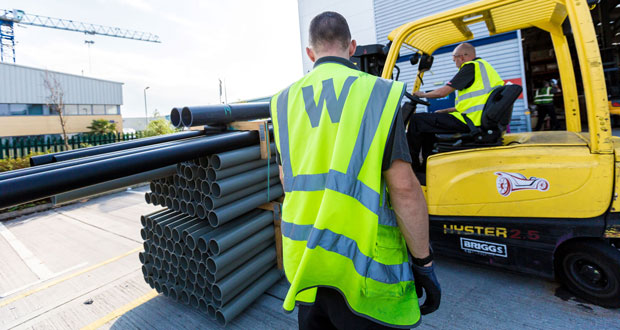
As the construction industry continues to evolve in line with decarbonisation goals, facilities managers must adapt or face being left behind
Andrew Lenton, Director of Business Development for Pipe Centre, explores the changes, and how merchants are supporting SMEs to navigate their new future.
The landscape for non-domestic buildings is changing rapidly. Legislative drivers, sustainability targets and new demands from end users are reshaping not only how we design and construct buildings, but also how we deliver essential services such as heating, cooling and water within them.
For facilities managers, this isn’t just an incremental shift. In some cases, it represents a step change in the technologies specified, the systems installed and the skills required to deliver and maintain them. It’s a new challenge, but one which brings huge opportunities for those willing to embrace it.
New demands and emerging sectors
At the heart of this transformation is the UK’s legally binding commitment to net zero by 2050. Policy measures such as the Future Buildings Standard and the continued updates to Building Regulations Part L are raising performance expectations for new and refurbished commercial properties. At the same time, corporate ESG commitments are accelerating demand for low-carbon, energy-efficient solutions across offices, healthcare, education and industrial assets.
However, while decarbonisation is critical, we’re also seeing rapid growth in new construction sectors that bring their own technical challenges, such as data centres.
The UK remains the largest data centre market in Europe, with 50 new facilities expected to come online within the next five years, and that pipeline will only grow as AI, cloud computing and digital services continue to expand. These facilities demand high-density cooling, resilient water systems and precise environmental control – all of which places increased emphasis on specialist HVAC and pipework solutions.
At the same time, the rise of tall buildings, particularly in London and other major cities, is reshaping system design considerations. Around 270 tall buildings (defined as 20 stories or more) have been built in London over the last decade and as buildings reach greater heights, building efficiency and the distribution of building services become more complex. Water and climate systems must be carefully engineered to maintain performance across multiple vertical zones, often within tight plant space constraints.
New heating technologies
Perhaps the biggest change is the gradual phasing out of large-scale gas heating systems in favour of low-carbon alternatives. Air source and ground source heat pumps, hybrid systems, heat networks and other electrified solutions are becoming increasingly common in commercial buildings, and this shift has major implications for pipework specification and system design.
Heat pump systems, for example, typically operate at lower flow temperatures than traditional gas boilers, which can influence emitter sizing, flow rates and pipe diameters. Materials selection also becomes critical, particularly in terms of corrosion resistance, insulation performance and long-term durability.
For contractors and maintenance engineers used to working in boiler-led plant rooms, the transition demands both technical upskilling and rethinking of established design habits.
Technical partners
This pace of technological change means it is critical that all businesses invest in training and continuous professional development if they are to remain competitive.
Low-carbon heating systems require familiarity with new commissioning processes, system balancing techniques and performance validation standards. Meanwhile, the integration of digital controls and building management systems demands closer collaboration between mechanical and electrical disciplines.
Smaller contractors in particular can feel the pressure, without the dedicated design teams or in-house training programmes that might be evident with larger contractors. SMEs often rely on external expertise and supplier partnerships to bridge knowledge gaps, and this is where the role of the merchant is evolving.
No longer seen as just distributors, our role has evolved into a technical partner for contractors and FMs navigating their new landscape.
It begins with product expertise. As system requirements become more complex, accurate specification advice is essential. Whether it’s selecting the right pre-insulated pipe, advising on press-fit solutions for plant rooms or supporting the transition to heat pump-compatible systems, early-stage input can prevent costly redesigns later. However, it goes well beyond simply selling products.
We also offer support with system design, which is becoming more important. For SMEs without extensive in-house design capability, we provide an added layer of reassurance through specialist support on product compatibility, performance data and system designs.
Adapting for a new future
This remains a pivotal moment for M&E contractors. Legislative pressure, sustainability goals and the growth of new building typologies are reshaping the landscape, bringing more complex performance requirements.
Those who invest in skills, embrace innovation and build strong supply chain partnerships will be best positioned to thrive.