 FMJ Facilities Management magazine providing industry-specific intelligence to FM and property professionals

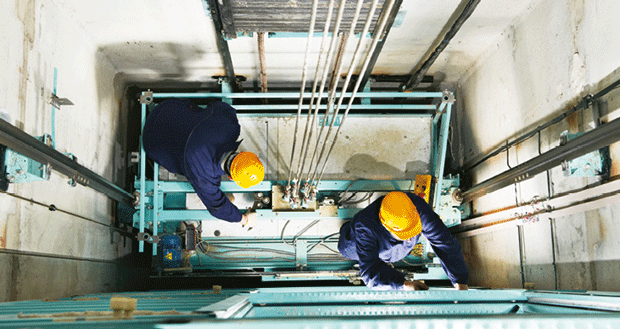
Lift industry leaders are calling for action as new research has found widespread competency gaps in FM teams managing lifts and escalators, with many struggling to keep pace with safety and compliance demands.
Skills gaps and competency shortfalls are leaving many facilities management teams unable to confidently manage and maintain lifts safely. These deficiencies risk occupant safety, disrupt operations, and expose building owners and managers to regulatory and financial penalties.
Amid rising safety and compliance demands, the research found that the skills shortage is leaving several areas of the profession vulnerable. This includes compliance documentation (53 per cent), preventative and predictive maintenance (44 per cent), emergency and fire safety systems management (37.5 per cent), incident investigation and root cause analysis (35 per cent), and installation and refurbishment quality (33 per cent).
The research, commissioned by PEW Electrical, a specialist supplier to the lift and vertical transport industry, revealed that 64 per cent of facilities managers and building operators say that the primary cause behind lift failures is a lack of skills in the sector.
However, it isn’t just the shortage of new skills entering the sector leaving room for risk, competency gaps among FM teams are also impacting safety. The research found that over half (54 per cent) of FMs report that their organisations do not enforce specific competency or accountability measures for lifts and escalators.
Looking at the broader training landscape in the FM sector, 61 per cent say that while their firms offer periodic training, they do not track competencies, and 33 per cent said that high operational workloads limit the time available for training.
Regulatory demands only add to the situation, with 47 per cent of FMs saying competence gaps are caused by an inability to keep up with rapidly changing regulations and standards, and almost half (44 per cent) admit that they are unclear of their obligations following the Building Safety Act.
With the construction and engineering sectors facing a need to recruit 250,000 additional workers by 2028, the lift industry is calling for action to revolutionise training pathways and better support the facilities management sector in safe maintenance and inspection regimes.
Jason Clark, Chairman at PEW Electrical, commented: “The shortage of specialist engineers is impacting all corners of the built environment, and the lift industry is no different. However, failing to address competency gaps could pose serious consequences for facilities managers, building owners and occupants alike.
“Frequent lift breakdowns not only disrupt daily operations and reduce accessibility but can also increase maintenance and emergency repair costs significantly.
“Furthermore, prolonged lift outages can damage tenant satisfaction and building reputation – potentially impacting leasing and property values. Lapses in preventative maintenance raise safety risks that expose owners to legal liabilities and regulatory penalties, especially under evolving building safety legislation.
“The FM sector cares about best practice, there is no doubt about that,” Clark continued. “But as an industry, we must prioritise collaboration, education, and training to support facilities management teams in maintaining lifts reliably, safeguarding asset value, ensuring operational continuity, and above all, protecting occupant wellbeing.”
The firm urges that effective collaboration across facilities management teams, engineers, and suppliers will be vital. It calls for clearer competency frameworks and targeted training partnerships with specialist suppliers to overcome the sector’s skills gaps and ensure that lifts remain reliable, compliant and safe.
Wednesday 14 January at 11:00am
Building Management Systems (BMS) have long been used to control the heart of a building – monitoring and controlling its essential systems such as lighting, ventilation, heating and air conditioning. Facilities Managers want the best visibility to help detect and deal with concerns before they become issues.
This webinar brings together the experts from energy network provider, E.ON along with FM thought leaders to discuss moving from a reactive service to a proactive service. By identifying energy issues early and automatically, instead of occupants reporting issues, then potential faults can be identified early and remedied. The BMS does this before the problem occurs by using smart alerting and EMC support services.
Panel:
- Sara Bean: Editor FMJ (Facilities Management Journal)
- Nick Westlake: Energy and Service Delivery Manager at E.ON Control Solutions
- Sunil Shah, the author of IWFM’s Energy Management Good Practice Guide and MD of Acclaro Advisory
- David Cermak, Regional Facilities Manager for David Lloyd Clubs
To register for the webinar which will be taking place on 14 January 2026 at 11:00am click here.