 FMJ Facilities Management magazine providing industry-specific intelligence to FM and property professionals

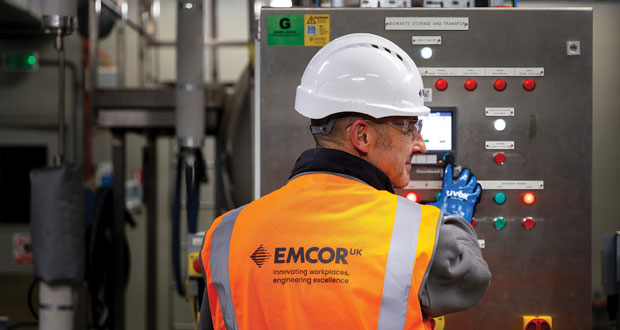

 Matt Kent, Director of Engineering, and Jessica Rauf-Thomas, Head of Operational Asset Management at EMCOR UK explain the risk-based maintenance approach that helped a national water utilities provider reduce planned maintenance time by 35 per cent
Facilities management has long been challenged by the complexity of managing a single organisation with varied occupancy profiles and asset criticalities across multiple sites. In large estates, poor asset data integrity and inconsistent maintenance regimes are common, potentially leading to excessive planned maintenance on low-risk assets and insufficient servicing of critical plants.
A national water utilities provider which had multiple dispersed sites and assets to manage, wanted to determine whether a risk-based maintenance strategy could be implemented to support more robust budget planning, despite uncertainties in asset lifecycle data. It also needed to align maintenance investments with regulatory planning cycles, reduce operating expenditure and improve asset reliability.
Over a period of six months, EMCOR UK’s Asset Dynamics service helped its long-standing utilities customer create an optimised maintenance strategy. We strengthened our approach by creating a framework for long-term strategic planning. As a result, we reallocated 35 per cent of planned maintenance hours across four sites to support asset failures and increase first-time fix rates.
TRANSITIONING FROM INDUSTRY STANDARDS
A key question arose during the planning period: could the utilities organisation move away from SFG20 industry standard maintenance towards a more tailored risk-based approach? We proposed a trial using Business Focused Maintenance (BFM) analysis.
This required an accurate asset register for our foundation. All asset attribute data needed to be updated and decommissioned assets removed to deliver effective maintenance and asset management. This process enriched the data for 28,500 assets with over 280,000 data points, which standardised criticality, condition, and lifecycle information. The data was verified and stored in the Computer-Aided Facility Management (CAFM) digital asset register.
The team initially surveyed three sites to understand where the trial could deliver the most value. After enriching the asset register, we conducted detailed surveys and implemented a six-step BFM analysis framework.
COMPLEX OPERATIONAL CHALLENGES
Operating multiple dispersed sites created immediate logistical challenges for the plan. We needed to coordinate access, arrange attendants for surveyors to access sites and work around the daily operational demands of site teams who could not pause their work to facilitate surveys. This approach required careful planning and flexibility between us and our customer.
The operational context and lifecycle stages of each asset required us to create a bespoke maintenance approach, in contrast to SFG20’s generic approach to service timings and frequencies. For example, a computer room air conditioning unit in a server room that runs continuously is fundamentally different from an office air conditioning unit that switches off over evenings and weekends, but if the industry standard is followed, they are treated identically. This lack of contextual differentiation meant the customer was potentially over-maintaining some assets and under-maintaining others.
Additionally, decisions needed to be informed by Ofwat’s five-year Asset Management Period (AMP) framework schedule, titled AMP8, which runs from 2025 to 2030. These elements all fed into our methodology.