 FMJ Facilities Management magazine providing industry-specific intelligence to FM and property professionals

 Indoor Air Quality is often an overlooked issue when it comes to workplace comfort and health says Janvi Patel, Product Marketing Manager, Mitsubishi Electric
Indoor air quality (IAQ) which refers to the air inside the spaces people live and work often flies under the radar. But IAQ must be viewed as a core part of building performance, not a separate matter or something less important.
Within the workplace improving IAQ can be a key driver in improving comfort and reducing complaints. It can also have a direct impact on workplace attendance and wellbeing.
Outdoor air may be drawn into buildings by ventilation systems such as Mechanical Ventilation with Heat Recovery (MVHR’s) and Air Handling Units (AHU’s), which can filter the air before it enters. But crucially, there are also pollutants created and present inside buildings which without adequate ventilation can become trapped – creating a harmful cocktail of substances for a building’s occupants.
AIR POLLUTION AWARENESS
Mitsubishi Electric has been working with the Building Engineering Services Association (BESA) to raise awareness of the dangers of air pollution, calling on the Government to establish policies that raise and enforce standards for businesses to play their part in ensuring good indoor air quality.
BESA and Mitsubishi Electric have produced a practical guide to IAQ called the BASH Guide (Buildings As Safe Havens), In addition to a foreword from Professor Cath Noakes OBE, which highlights how ventilation is the most overlooked building safety issue, the guide includes a four part assessment grid to help facilities managers work out their starting point on IAQ.
As the following steps demonstrate, improving air quality doesn’t have to be a disruptive process, but can rather be operational and maintenance led.
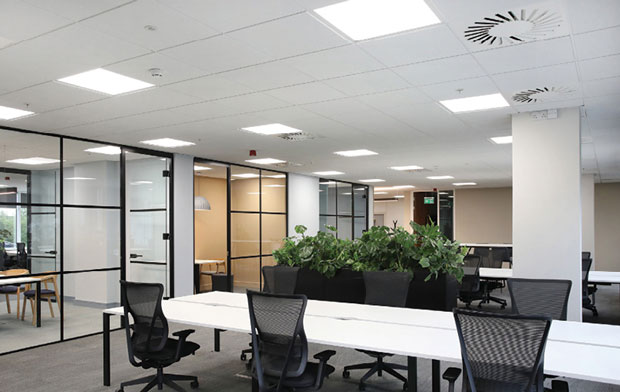
HOW CAN FACILITIES MANAGERS IMPROVE IAQ?
1. Start with a simple IAQ review
IAQ can vary on an hourly basis, so it’s always advisable to deploy continuous monitoring with regular policy reviews. A good first step can be to conduct an initial audit: identify your building types and risk areas, focusing on high-occupancy zones, older spaces and areas more susceptible to damp and mould.
There are many competing monitoring and certification schemes for buildings relating to both IAQ and other health and wellbeing aspects. However, many of these schemes assume access to high-cost specialists, state-of-the-art instruments and sophisticated laboratory grade techniques, far removed from the reality facing many facilities managers.
The most practical path for facilities managers to establish a baseline is to engage the certified, professional-grade calibrated instruments on the market, and upskill knowledge and experience internally to interpret the results.
2. Get ventilation right
We know that the quality of air is affected by both internal and external pollutants. As such, getting ventilation right can give facilities managers more control over what goes into buildings, and what is taken out.
When it comes to uplevelling ventilation systems, mechanical ventilation with heat recovery (MVHR) systems can reduce energy consumption from heating and cooling, while ventilating to remove internally generated moisture, pollutants and even excess heat.
To get the most out of ventilation technologies, regular maintenance and cleaning is essential. Ventilation equipment should also be fitted with the highest appropriate quality of filters, which play a crucial role in removing pollutants from external air as it enters a building.
It can also be a good idea to carry out an outside air quality assessment near the building to determine the level of filtration required.
Facilities managers should familiarise themselves with the global technical standard, which includes three efficiency classes for filters – ePM1, ePM2.5 and ePM10 – listed here in order of highest to lowest efficiency. ePM1 class filters should be deployed in buildings that are close to roads and in city centres, where external air quality is typically at its lowest.
3. Start small, then scale up
Not all buildings are the same, and neither are their budgets. For some facilities managers, a complete technology overhaul might be at odds with budgets available. However, it’s important to remember that a full rethink of ventilation is the finish line, not the starting gun. There are simple, accessible steps that can be taken to reduce indoor pollution at source, providing immediate improvements to IAQ.
Harmful particulate matter and chemicals can arise from a number of everyday items – from scented candles to cleaning products. Consider using them with windows open where possible or switching to products containing less harmful toxins. In older buildings, taking steps to reduce damp by ensuring regular maintenance, checking on wall insulation and prioritising ventilation efficiency in bathrooms and similar spaces can improve indoor air quality.
 CLOSING THOUGHTS
IAQ is manageable when approached step-by-step. It’s important to also realise that it isn’t a one and done process – just as important as new technologies and ways of working is continuous monitoring, regular cleaning and maintenance. As the weather turns, now is the perfect time to shift priorities to IAQ and develop a lasting plan.