 FMJ Facilities Management magazine providing industry-specific intelligence to FM and property professionals

With spring just around the corner, Madeleine Ford looks at how facilities managers can prepare their grounds for the upcoming season and minimise risks throughout the year to come
Spring represents more than a seasonal change, it is a critical intervention window to assess any damage and prepare your grounds for the upcoming season. Winter rarely leaves without consequence. Frost, heavy rainfall, storms and prolonged periods of cold take a quiet toll on outdoor space, degrading hard surfaces, compacting soil, stressing planting and testing drainage systems. While at first glance the impact may not seem major, the underlying damage can present significant operational, financial and safety risks if left unchecked.
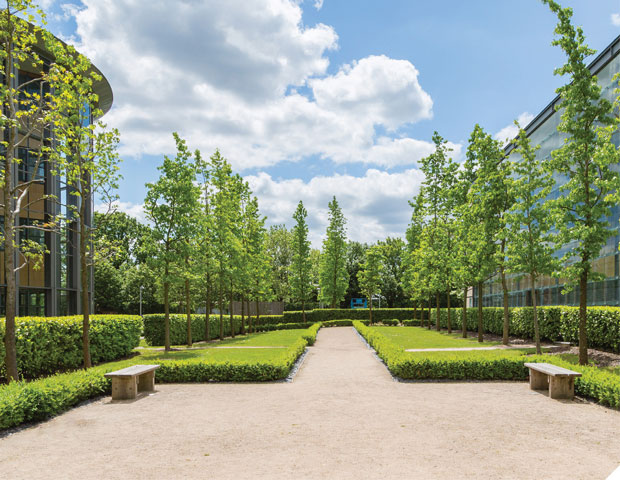
POST WINTER RISKS & EARLY INTERVENTION
While there are visible issues that can be immediately dealt with, such as debris, broken branches and damaged fences, Martin Beaumont, Founder of Monty Miracle, says it is the slightly less obvious things that you need to look out for. For example:
- Moss and algae that builds up during the wetter months creates persistent slip hazards and may cause cracks later, leading to trip risks and ruined outdoor appearances.
- Cracks, splinters, and holes in hard surfaces should not be ignored as they will quickly grow when the colder weather comes around again, after filling with water which freezes and expands. Managing surface build-up early with a gentle clean can prevent this, rather than jet washing which does not get to the root of the problem and can damage vulnerable areas.
- Water management is one of the biggest ‘silent’ risks. Blocked gullies and drains, silted channels and compacted ground conditions all contribute to poor drainage performance. When water cannot disperse effectively, it leads to pooling on hard surfaces and waterlogging in planted areas- causing slip hazards and threatening plant health.
- Failed or stressed plants that aren’t remediated in early spring often require full replacement by mid-season, elevating cost and disruption.
- Compaction is commonly overlooked. Prolonged wet conditions combined with foot traffic compress soil particles, reducing pore space and limited air and water movement. Planting becomes stressed and recovery during spring is slowed.
Addressing these problems early and effectively significantly reduces safety risks, avoids operational disruption and protects long-term asset value once footfall increases in spring. Proactive intervention avoids the sharp reactive spend that occurs when estates teams are forced into crisis mode during peak season. “This is the time for tidying, fixing, cleaning, and prepping for the coming months,” says Beaumont, “it’s important to ensure everything is kept tip top, from an aesthetic and safety point of view.”
Tackling these issues before peak season ensures resources are used strategically rather than reactively.
Winter and early spring can be the busiest and more critical period for grounds maintenance says Dean Pearson, Senior Operations Manager at OUTCO: “Paradoxically, as not much grows during this time, it’s when the fruits of our labour are least visible yet crucial.”
MAINTENANCE & UNPREDICTABLE WEATHER
Grounds maintenance planning is increasingly shaped by climate volatility. Unpredictable weather patterns such as heavier rainfall, prolonged dry spells, and sudden frosts, are pushing teams to adopt more condition-based maintenance, rather than traditional calendar-led schedules.
Tony Gibson, National Senior Business Development Manager, Nurture Group says: “Plans are becoming more flexible, with increased focus on soil restoration, drought-resistant planting, mulching for moisture retention and extended monitoring through shoulder seasons.”
He also explains that long-range forecasting is playing a greater role in scheduling interventions, while rapid-response capability for storm recovery is increasingly factored into contracts and resource planning. Spring preparation is now an adaptive process. The focus is on strengthening landscapes so they can withstand extremes, rather than simply restoring aesthetics.
Climate volatility means that maintenance strategies are being reshaped. Rather than scheduling works purely by month, teams are monitoring soil moisture, drainage performance and plant stress indicators to inform decision making. Monitoring plays a greater role, as by extending oversight into shoulder seasons, late autumn and early spring, enable teams to identify issues before they become acute.
Grounds maintenance has moved from simple restoration to resilience building; with grounds managed as dynamic systems that must withstand environmental stress.