 FMJ Facilities Management magazine providing industry-specific intelligence to FM and property professionals

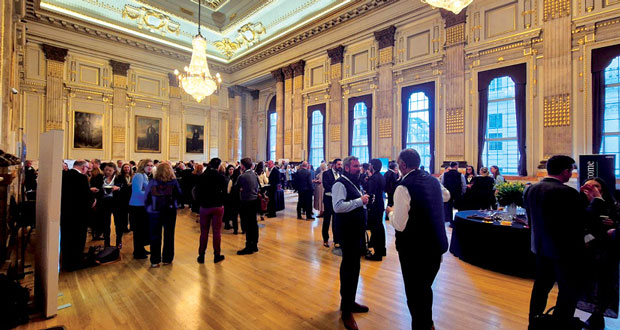
 The 2026 Workplace Futures Conference moved on from last year’s AI theme to take a broader look at a roadmap for the future and how to navigate the next few years. Sara Bean reports
Workplace Futures acts as a barometer on the state of the FM sector, and this year’s theme, ‘a roadmap for the future’ had a greater sense of urgency when you consider there is an FM leadership time bomb, with 44 per cent of FMs being over 55 and 30 per cent of the workforce set to retire.
Addressing these challenges, Dr Mel Bull, Director of Executive Education, Nottingham Trent Business School advocated an adaptive leadership approach, focused on bringing in new talent and developing existing staff. With the dearth of FM related academic courses, FM leaders must concentrate on developing their own people, such as mentorship schemes to empower the future generation.
This sentiment was echoed by Steve Gladwin, Director, Nodus Solutions who believed FMs need to change the narrative of ‘falling into a facilities career,’ to an understanding that FM attracts individuals who can apply their transferable skills to often complex and demanding roles.
Celebrating FMs origins, Sarah Hodge, Global Director Experience, London Stock Exchange outlined the history of FM, from its inception in the 1970s to current challenges. She remarked that the industry didn’t evolve by accident, it grew because people cared enough to push the boundaries, to connect the dots, to challenge the laws and enjoy meaningful change. And with the advent of AI, hybrid working and environmental challenges, the next chapter she said, “is yours”.
FORCES FOR CHANGE
Reviewing the current state of the market, John Raspin, Global Head Growth Opportunity Analytics, Frost & Sullivan reported that FM in the UK represents three per cent of GDP, amounting to £77 billion annually. The industry is maturing, with a focus on technology, ESG and sustainability and “we can expect the further intensification of the AI buzz”.
With his ingenious ability to summarise the complexities of tech, Andrew Targell of JLL Technologies took us on a lightening tour of technology trends. The key elements are technology, talent, regulatory, expectations and occupancy he explained. With the latter: “We’ve got to look at how the digital supports the physical experience and that means a real change, as it’s not necessarily the new technology it’s having a new mindset.”
Our approach to AI must be founded on data standards, advised Mark Griffiths of WMA Consultancy and Gordon Mitchell, Founder, WHOLUS, who talked delegates through the compliance and standards landscape. We can’t lose sight of the human element they stressed, which is why data standards will help govern AI and digital enabled FM.
THE TALENT PIPELINE
A series of talks focused on the route to success, which begins with nurturing the FM ecosystem. Simon Wrenn, CEO, Kindred FM described a variety of ways of inspiring the next generation of FM leaders, from offering apprenticeship and work experience, to crucially, showing pride in the profession.
Pride in the sector is reflected in Churchill Group’s commitment to growing skills within its business. James Bradley, CEO, described the company’s skills training to enhance confidence, judgement skills and leadership capabilities, all of which is seen he added as a self-perpetuating investment.
The relationship between tech and people was the theme of Louisa Clarke Co-Founder, (with conference chair Simone Fenton-Jarvis) of The Human-Centric Workplace who asked: “if your technology investment doubled tomorrow, would your leadership capability be strong enough to turn it into better outcomes? Are we giving the next generation of leaders the opportunity to own their future and lead ours?”
Looking at widening the talent pipeline, Debbie Dobson, Talent & Capability Director, ISS UK & Ireland argued that social mobility needs to be integrated into workforce strategy, not just CSR, adding that we hear a lot about technological readiness, but the real challenge lies in human readiness and access to human potential.
FUTURE SUCCESS
Human interaction is the key to successful client and supplier partnerships. For their part, Claire Atkins Morris, Sustainability and Workplace Culture Director, Sodexo UK & Ireland and Alex Hammond, Associate Director, Net Zero and Sustainable Procurement, NHS England described the formation of a community of practice on climate, social and nature goals; while Ryan Horton, Business Unit Director, CBRE and Paul Dawson, Director of Facilities, Sky Studios Elstree described the unique challenges of a film production site and their shared excitement on what the future holds.
In his update on the next phase of sustainability Sunil Shah, Managing Director, Acclaro Advisory agreed that technology and science have a huge role to play in FM but if it’s not connected with the business strategy it could cause more problems and become a barrier to success.
In her annual conference summary Lucy Jeynes, Managing Director, Larch Consulting described the overriding theme of the day as leadership development and engaging meaningfully with technology in a way that can support important outcomes. Not surprisingly, her call to action for this year was that talent is a “major challenge for the FM family”.
This is why succession planning is key, and this conference delivered many positive examples and inspiration for the road ahead.