 FMJ Facilities Management magazine providing industry-specific intelligence to FM and property professionals


CASE STUDY: KEEPING RETAIL ESTATES OPEN AND SAFE DURING WINTER
When a leading UK retail property group faced repeated closures and accident claims during severe winters, they turned to us to overhaul their outdoor safety strategy across more than 100 shopping parks nationwide.
The challenge was twofold: maintaining business continuity during snow and ice events and providing auditable proof of service for multiple stakeholders. We implemented a predictive winter maintenance programme using live MetDesk data and GPS-tracked vehicles to deliver gritting and snow clearance exactly where and when needed.
Each visit generated a time-stamped report with before-and-after photographs uploaded to OUTCO’s client portal, giving property managers real-time visibility and assurance that every site was safe and compliant.
Over two consecutive winters, the programme achieved zero weather-related closures and a significant reduction in reported slip incidents. The data-driven evidence also helped the client negotiate lower insurance premiums, proving that proactive maintenance directly enhances both safety and financial resilience.
We’ve seen how transparency and traceability have reshaped client expectations. Our teams operate nationally across thousands of sites, using GPS-tracked vehicles, live service logs and time-stamped reports. That digital evidence trail gives facilities managers confidence that their estates are being proactively managed and that they can demonstrate compliance should an incident occur.
A verbal assurance that “the car park was gritted” is no longer enough; FMs need data to prove it. The same applies to vegetation management, drain clearance and surface inspections. In this sense, safety data has become a new form of security.
DESIGNING IN SAFETY
Good outdoor safety starts long before an operative sets foot on site. It begins with understanding the unique risk profile of each location. A retail park has different vulnerabilities from a logistics depot or a hospital campus. Pedestrian traffic, surface gradients, exposure to weather, nearby trees and drainage routes all influence the likelihood of hazards emerging.
By mapping these factors, facilities managers can move from reactive maintenance to proactive prevention. Scheduled inspections, predictive gritting based on live weather data or rolling tree surveys all build resilience into the estate. When safety is designed in, disruption is designed out.
 THE COST OF COMPLACENCY
With tight budgets and rising costs, it can be tempting to reduce outdoor maintenance programmes. Yet cutting corners on safety often leads to far greater expense down the line.
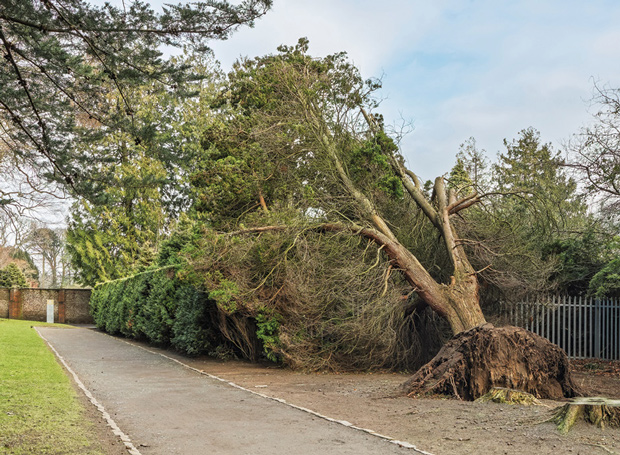
An untreated icy entrance that causes one injury claim can easily outweigh the cost of a full season’s gritting. Flood damage from a blocked gully can close a site for weeks. Neglected trees can cause structural damage and reputational fallout. Safety and security are not separate budget lines they are investments in continuity.
SECURITY STARTS UNDERFOOT
Security has traditionally been seen as a barrier, keeping threats out. But true security is also about keeping people safe within. Fences and cameras are reactive; they deal with the “what if”. Safety is proactive; it deals with the “what now”. The two must work together.
As the UK faces more extreme weather, growing maintenance backlogs and increasing demands for accountability, outdoor safety has become integral to every facility’s risk strategy. The most secure sites in the future won’t be those with the tallest fences, but those with the fewest preventable incidents.
Outdoor safety may not beep or flash, but it underpins every aspect of estate management. It’s the reason staff arrive safely, customers feel welcome and businesses operate without disruption.
We believe true security starts underfoot, with clear drains, safe surfaces, healthy trees and proactive winter planning. Because when the outdoors is safe, everything else works better.