 FMJ Facilities Management magazine providing industry-specific intelligence to FM and property professionals


 Patrick Martin, Co-Founder and Director of Sanaway explains why specifying matting correctly helps keeps employees safe, floors protected and reduces costs
Companies have a legal obligation to safeguard their employees and visitors against workplace hazards under the Workplace (Health, Safety and Welfare) Regulations 1992. The British Standard BS 7953 Code of Practice specifically recommends the use of appropriate entrance flooring systems to reduce soil and moisture ingress to the lowest practicable levels, helping businesses meet their legal obligations and reduce liability risks.
The correct specification of both indoor, and as importantly, outdoor matting not only helps reduce the risk of slips, trips and falls but additionally reduces water ingress and prevents up to 80 per cent of collected dirt being bought into your building.
Rain, sleet and snow increase the ingress of water, moisture, and dirt being tracked into buildings, which in turn, substantially increases the occurrence of floor damage and the risk of slips, trips and falls (STFs). Yet, though the winter weather brings with it a visual cue to audit your matting requirements, floor safety and protection is a year-round requirement.
Dry spells can lead to the increased transfer of dust, stones and fine debris into buildings, and these microscopic abrasions can dull the appearance and damage natural wood and hard floor surfaces as well as carpets over time.
INVEST TO SAVE
Repairing or replacing damaged floors is a costly and an unwelcome cost when budgets are consistently under pressure to deliver more for less. Dirty floors can increase the amount and nature of cleaning required to have them presentable. By investing in the right engineered matting solution, you can keep dirt and moisture to a minimum and help minimise cleaning costs, while maintaining a safe, clean and welcoming environment for employees and visitors.
REDUCE THE RISK OF SLIPS, TRIPS AND FALLS
According to the Health & Safety Executive, STFs cost UK employers approximately £512 million per year in lost production, as well as other costs, and are the single most common cause of non-fatal injuries in UK workplaces. Whilst not all STFs can be attributed to wet and dirty floors, providing effective matting significantly reduces moisture and debris ingress, and reduces the STF risk that may otherwise leave your company open to a liability claim.
REDUCE WEAR AND TEAR
Unsightly floors don’t look hygienic or portray a standard of professionalism and care. Dust, rain, snow, mud, stones, grease, road grit and salt are just some of the materials that can be transferred into buildings and lead to the damaging of floor surfaces. A properly placed matting solution not only minimises most dirt and moisture ingress but also prolongs the life of the building floor surfaces.
CHOOSE MATTING THAT SUITS YOUR BUSINESS
OUTDOOR SERVICE MATTING: Outdoor mats tend to be made from a coarser nylon twist that is effective in removing heavier detritus and physical elements, compared to indoor ones that will have a finer pile.
STANDARD SERVICE MATTING: Durable and effective mats that are generally made from nylon and polypropylene will trap dirt and absorb moisture to reduce the nature and amount of cleaning on floors. These mats are loose lay and are laundered on a service frequency to suit individual requirements. They may be provided on rental or purchase options, with or without servicing by the mat provider. The advantage is that your supplier will provide you with a clean replacement on a one-in-one-out basis while the dirty mats are laundered off-site, meaning you’ll always present clean mats that maintain safety and first impressions.
FIXED ENTRANCE MATTING: In areas of extremely high footfall, fixed entrance matting is more hard wearing, for instance, at entrances to shopping centres, leisure centres and large office estates. These mats are high quality, durable but are not adjustable due to their fixed nature. Unlike removable entrance matting, fixed mat cleaning involves a combination of vacuum cleaning and hot water extraction carpet cleaning machines on-site. It is very rare that these tough mats are damaged, but they will become worn over time, requiring replacement.
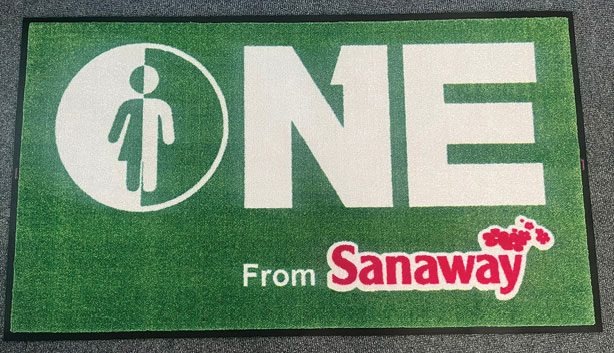
LOGO MATTING: Entrance matting is one of the first visuals that visitors to building premises will see and is a branding opportunity that is often missed. Personalised logo matting is particularly popular with independent schools and leisure facility customers that want to present their brand to building visitors from the moment they step through their doors. These mats have the same performance qualities as non-branded mats and can feature the company’s logo and messaging. They really create an impactful first impression.

PROTECTING OLD AND NEW FLOORS
A large proportion of our matting services are with schools and other buildings that have a mix of modern floors and historic wood and tiled floors. Some of the older, historic wood and tiled floors cannot be replaced or would carry significant expense to do so. That’s where appropriate matting can help conserve them by reducing the damage inflicted upon them from dirt and moisture ingress.
NEXT STEPS IN SELECTING THE RIGHT MATTING
Invite a service provider to carry out an audit of your premises. They will identify risk points where indoor and outdoor matting would be advised and ensure that the floor matting system is specifically designed to create a safe and hygienic barrier for your building. Look for matting suppliers that provide:
- Site audits free of charge.
- A range of leading matting brands to include tile, grid and rubber backed matting systems.
- A range of type and colours to suit individual décor and environments that might require mats for safety, wet areas, and anti-fatigue or electrical matting.
- Advice provided for ongoing maintenance.
- A range of service frequencies from weekly, 2 weekly or 4 weekly to suit individual environments.
- A sustainable provision by providing mats made from recycled materials that can be disposed of at their end of life through auditable zero waste to landfill services that use energy from waste.
The Royal Alexandra & Albert School (RAAS) is a co-educational state boarding school located at Gatton Park in Surrey. Founded in 1758, the school occupies a 260-acre estate of beautiful parkland, woods and gardens. With over 1,250 students and staff, the school experiences heavy year-round footfall from students, external clubs and public activities outside school hours and during holidays.
The site encompasses a range of historic and modern buildings that contain a variety of flooring surfaces, both old and new that require protection from dirt and moisture ingress, as well as providing a means to prevent accidents from trips and slips on wet or muddy floors.
The school’s Domestic Services Manager, Elaine Groenewald said: “I invited Sanaway to audit our school for indoor and outdoor matting across the estate and help solve some operational issues we were encountering. Since then, the regular mat servicing has meant noticeably less dirt and mud transferred to our floors, especially in winter, and keeps the mats clean and fresh, creating a hygienic environment for students and visitors to the school.”