 FMJ Facilities Management magazine providing industry-specific intelligence to FM and property professionals

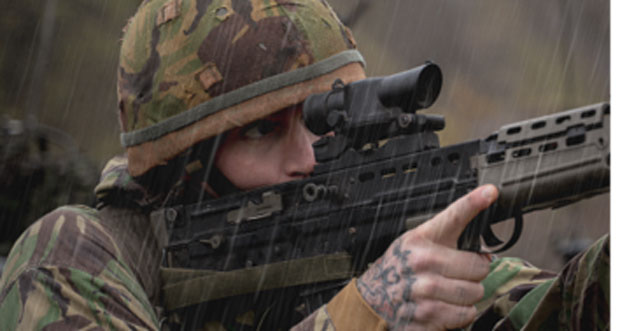
 Above zero and below the radar, Non-Freezing Cold Injury is a real risk for UK workplaces, Paul Rees of Veterans for Veterans explains to FMJ
April creates a false sense of security. Frost risk drops on the register. Winter is considered done. But in the UK, April is often wet, with long spells of rain, cold wind and single figure temperatures at 06:30 hrs. Saturated ground and waterlogged PPE are the exact conditions that cause Non-Freezing Cold Injury.
NFCI does not require ice. It does not require sub-zero temperatures. It develops above 0°C when cold, wet exposure is prolonged and circulation is restricted. Add long shifts and limited opportunity to dry kit and the risk increases.
“Wet plus cold plus long hours in safety boots. That is the formula,” says Paul Rees, former soldier and now adviser on cold injury risk. “It does not take snow. British weather does the job every winter.”
The injuries first gained widespread attention in the Armed Forces where soldiers experience extended periods in soaked boots in static positions with limited rotation. Between 2010 and 2017, the Ministry of Defence recorded almost 5,000 cases of NFCI through Freedom of Information data, and many more went undocumented.
Now the same exposure profile exists across civilian sectors, including construction, highways, rail, utilities, energy, facilities maintenance and security. In fact, any role that combines cold, wet conditions with restricted movement and occlusive footwear carries risk.
WHAT NFCI ACTUALLY DOES
Non-Freezing Cold Injury damages small blood vessels and peripheral nerves, most commonly in the feet.
Early symptoms are easy to dismiss:
- Persistent cold sensation
- Tingling or numbness
- Pale or mottled skin
Reduced feeling in toes. If exposure continues, the damage can become chronic. Long-term symptoms include:
- Severe cold sensitivity
- Burning pain
- Hypersensitivity to minor temperature change
- Excessive sweating
- Loss of balance
- Ongoing nerve dysfunction
For some, the condition becomes permanent.
This is not about discomfort, the condition affects mobility, concentration and safe task execution. A worker who cannot properly feel their feet on a wet surface is at higher risk of slips and trips. Chronic pain affects sleep and cognitive performance while cold hypersensitivity can make routine outdoor duties intolerable. Unfortunately, in many cases these symptoms are often brushed off until they become career limiting.
WHY SPRING MATTERS
Winter controls often reduce once frost risk drops, yet prolonged rainfall and low ambient temperatures continue well into spring. Waterlogged boots do not dry between shifts without intervention. Concrete and steel retain cold. Early morning callouts mean teams start work before temperatures rise, so the assumption that risk ends when ice disappears is flawed.
NFCI has already cost the Ministry of Defence millions in compensation. In the civilian world, the legal exposure is less discussed but no less real. Under the Health and Safety at Work Act 1974, employers must control foreseeable risk. Cold and wet exposure is foreseeable in the UK climate and so are its consequences.
REASONABLE ADJUSTMENTS AND RISK CONTROLS
Effective prevention sits across engineering, administrative and PPE controls.
Engineering Controls
- Heated, dry welfare areas positioned close to work zones
- Dedicated boot drying systems
- Covered access routes where feasible
- Improved site drainage to reduce standing water
Drying capability is critical. Saturated boots worn day after day create cumulative risk.
Administrative Controls
- Task rotation to limit prolonged static exposure
- Structured warm-up breaks
- Monitoring of exposure duration during sustained rainfall
- Early reporting systems for cold sensitivity symptoms
- Supervisors should be trained to recognise early signs of cold injury. Not just frostbite
PPE Controls
- Waterproof and breathable safety boots
- Layered sock systems designed for moisture management
- Water-resistant gloves with thermal protection
- Spare dry socks available during long shifts
Where an employee develops chronic symptoms, the Equality Act 2010 may apply if the condition has a substantial and long-term impact on daily activities. Reasonable adjustments may include modified duties during cold spells or reduced exposure time.
WHY VETERANS ARE SPEAKING UP
Veterans for Veterans is a UK claims management company staffed by former Armed Forces personnel. They support ex-service men and women pursuing compensation for service-related Non-Freezing Cold Injury and noise-induced hearing loss. They are seeing an increase in enquiries from veterans whose cold injuries have worsened years after exposure. Many transitioned into civilian sectors with similar environmental conditions and their symptoms followed.
Between 2010 and 2017, almost 5,000 cases were formally recorded within the Armed Forces. That scale of data provides insight civilian sectors should not ignore.
“We are not here to sell fear,” Rees says. “We are here to stop this happening again. This time on civvy street.”
Veterans understand the exposure pattern. Long hours, wet kit and limited rotation. That experience places them in a position to recognise risk early and speak plainly about it. Prevention costs less than compensation and more importantly, it prevents permanent harm.
THE BOTTOM LINE
Non-Freezing Cold Injury can happen above 0°C. It can happen anywhere prolonged wet and cold exposure is combined with restrictive footwear and limited recovery time. But it is preventable and ignoring it because the frost has gone is not risk management, it is optimism. British weather does not need to freeze skin to cause damage. The conditions are already here.