 FMJ Facilities Management magazine providing industry-specific intelligence to FM and property professionals

 Alex Morgan, Key Account Manager for FM at Kärcher explains how a preventative approach to floor maintenance can help reduce costs, enhance safety and protect long-term asset value
Facilities managers operate at the intersection of performance, perception and cost. Every decision, from maintenance schedules to equipment investment, has a direct impact on how a space functions and is experienced. Yet one area that is often underestimated is floor maintenance. Floors are among the most heavily used assets in any facility, but when maintenance is reactive rather than preventative, the hidden costs can escalate quickly and issues compound.
When floor care is approached on a “fix when it fails” basis, dirt, debris and moisture accelerate surface wear which drives the need for more frequent repairs or replacement. Instead of predictable, planned maintenance costs, facilities managers face unplanned expenditure and disruption. In high-footfall environments such as healthcare settings, offices or transport hubs, this challenge is amplified, narrowing the gap between routine wear and major intervention.
Poorly maintained floors can also quickly become slip hazards, particularly where contaminants or moisture are not effectively managed. This increases the risk of accidents and carries clear implications for compliance, liability and duty of care – making consistent floor maintenance a critical responsibility for facilities managers. Alongside cost and safety, perception is another often overlooked factor.
PREVENTATIVE APPROACH
Shifting to a preventative approach changes this dynamic as facilities teams can implement consistent, planned cleaning regimes that protect flooring over time. Removing abrasive dirt before it causes damage, maintaining surface condition and addressing issues early all contribute to extending the lifespan of floor materials. This not only preserves the appearance of a facility but also reduces the likelihood of costly interventions further down the line.
In practice, effective prevention is not just about frequency, but process. Simple steps, such as sweeping ahead of scrubber drying, reduce the risk of abrasive particles damaging floor surfaces while improving cleaning efficiency. This approach also helps protect equipment by minimising slurry build-up and premature wear, supporting more reliable performance and a longer operational lifespan.
INNOVATIVE APPROACH
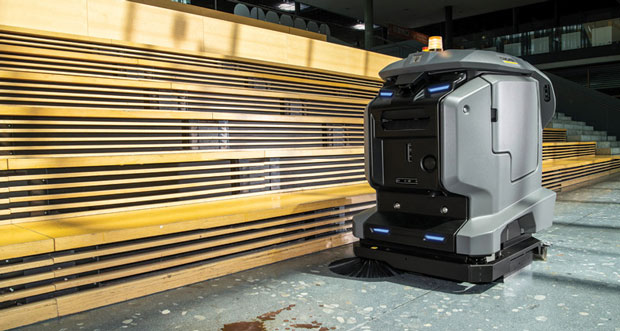
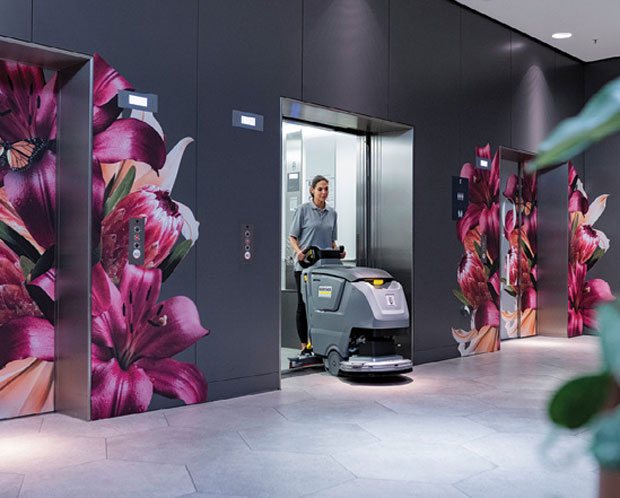 Technology is central to making this approach achievable at scale. Modern scrubber dryers, vacuum cleaners and robotic floor cleaning systems enable facilities managers to deliver consistent, repeatable results across different environments. Scrubber dryers provide an effective method for cleaning hard floors, removing dirt and residues in a controlled manner, while professional vacuums capture fine dust and debris that can otherwise contribute to wear. Robotic floor cleaners, introduce an additional layer of consistency by carrying out scheduled cleaning tasks autonomously, ensuring that baseline standards are maintained even in large or complex spaces.
Connected cleaning and telemetry technologies are also giving facilities managers greater visibility and control over equipment performance, usage and maintenance requirements. By enabling real-time monitoring, location tracking and proactive maintenance alerts, connected equipment management helps reduce downtime, improve asset utilisation and support more informed operational decision-making.
KEEPING STANDARDS
Preventative maintenance also depends on consistency. Delivering the same standard of cleaning across large or complex environments requires the right combination of human expertise and equipment. By streamlining routine, high-frequency tasks, facilities teams can ensure floors are maintained regularly and to a consistent standard, while freeing operatives to focus on areas that require judgement and attention to detail.
Within this context, there is growing recognition of the value of partnership-led approaches. Kärcher’s “Partners in Shine” initiative, an educational campaign focused on promoting best practice in professional floorcare, reflects a shift away from transactional relationships towards collaborative models focused on long-term performance. By working closely with customers, facilities managers can access not just equipment, but also insight, expertise and tailored support that align with their specific operational needs.
Frameworks such as PDIR (Plan, Do, Inspect, Review) further reinforce this approach by providing a structured methodology for continuous improvement. Planning ensures that cleaning strategies are aligned with the unique demands of each facility, implementation focuses on delivering those plans effectively, inspection allows for performance to be monitored, and review enables ongoing refinement. This cycle helps ensure that floor maintenance remains proactive rather than reactive, adapting to changing requirements over time.
The importance of consistent, high-quality environment is as dependent on floor maintenance as other areas of the workplace. By prioritising prevention and adopting a more strategic approach, facilities managers can reduce hidden costs, enhance safety and maintain the long-term value of their assets.