 FMJ Facilities Management magazine providing industry-specific intelligence to FM and property professionals
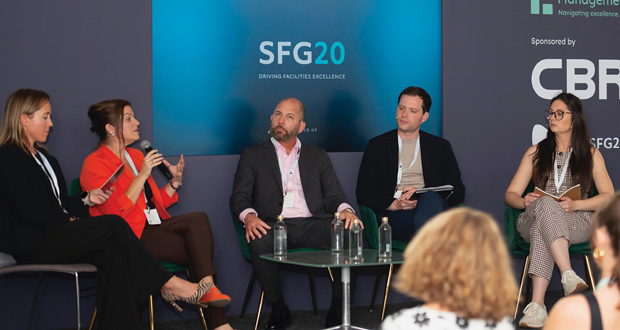
SS: “Policy is just one element when it comes to this, initiative is another, it’s a topic that can be uncomfortable for some people, so how can leaders be role models for their workforce?”
CM: “For me personally it’s something I have tried to champion, and I have had difficult conversations with different departments. As employers we have the duty of care for our employees, it’s about going back to the lessons learned and taking them back to the frontline. If someone brings a problem we catch them, we help them.”
LH: “I think we need to be very mindful of our own actions and how that has an effect on the person. We can talk about putting these initiatives in place that help with work life balance, but then we’re sending that email at five o’clock in the afternoon and not thinking about the person receiving it. Going back to the policy element, we’ve got to be mindful that we’re dealing with people every time. You have to think would I want that? The key is to be mindful of the impact we’re having.”
SS: “The point was made earlier that mental health in a workplace sits with both the leadership teams and the employees themselves to direct. How can employers educate their workforce?”
HL: “Teaching employees to recognise signs of stress, anxiety and burnout is one of the most important things because a lot of people ignore it to the point where they are really suffering. Additionally, a bit of vulnerability from employers and creating a sense of psychological security, perhaps by sharing past experiences, can go a long way.”
LH: “Psychological safety is key. Making sure that someone feels secure in their role, and they’re not overwhelmed. It’s empowering people to speak up because we don’t always recognise what we’re either doing or having done to us when dealing with our own workload.”
SS: “Banishing the taboo and getting people to talk more in the workplace is not always easy, how can you help that to happen?”
CM: “There’s no one size fits all. We tried that during Covid with the remote workers across the country. Accountability sits with us as leaders. For example, when our hybrid workers come in, we have got to create an environment for them to want to be there. For those who don’t want to come in, can we go to their environment? Can we find a halfway point? It’s very important we don’t isolate those colleagues. We have tried several initiatives at work where we’ve tried to organise a men’s group, as we have a women’s group that works very well. But we haven’t had the same success with the men. We tried for three months and guess what? No one wants to come. We tried but we’re only as good as the people who are prepared to come and have a conversation. What I try to do with the people I work with is give them coping mechanisms, it’s beholden on me as a leader.”
OH: “The idea of having a second place to meet people is important. Actually leaving the office and going for a walk to the local café for example is going to help give you that break from an office environment and perhaps help people talk to each other. That’s one of the reasons we’ve seen a rise in the campus style activity where the desk is not solely where you do work anymore, it’s away from the desk because you can be collaborative and give yourself the needed headspace.”
SS: “What’s the discussion around clients and providers working together in terms of spotting and supporting mental health? Is that a conversation that’s happened or something you see in the future?”
LH: “Where you see it working well is when you’re working for clients who have a good culture around mental health, wellbeing and looking after their staff. So therefore, it helps you to have a good partnership. Do I think that it’s something that we’re looking at as an industry where there is collaborative work between the client and service provider? Probably not now, but it’s something we need to be thinking about and making it part of the KPI’s and contracts. Are we there? No. Do I think we can get there? Yes, is the answer.”
CM: “To challenge that, going back to the start of the pandemic, what I saw was a lot of clients wanting to open their doors and collaborate for the first time. And through the pandemic we saw the introduction of mental health first aiders and there was lots of conversation on LinkedIn on this topic. Looking back at the past couple of years, I can’t recall the last time I saw something on it which was mental health related in terms of completing a course or initiatives. It doesn’t feature on any agenda and hardly any reports that I see weekly or monthly. So, where’s the future going with it? I would like to see it back on the agenda as not just as a tick box. It needs to be within the ecosystem of service delivery.”
SS: “Food has often been an element that has been overlooked in terms of workplace wellbeing. How important is food, how can it help people with not only productivity but with their mental health and wellbeing?”
HL: “Food and mental and physical health are intrinsically linked. I’ve seen a shift in the seven years that I’ve been in the contract catering industry, when we’re looking through tenders and bidding for new business, I’m seeing it is high up on a lot of organisations priorities now. If we provide nutrition and wellbeing initiatives it is a real driver in terms of whether they decide if they want to employ us as their contract caterer. So, we’re seeing a positive shift. People are beginning to understand that there is a strong relationship between what you eat and how you feel. A lot of people are relying on workplace catering for a couple of their meals per day. Nutrition is linked to psychological resilience; there are key nutrients involved in that. Omega 3, magnesium, B vitamins, they contribute to the production of dopamine and serotonin. Fibre also plays an important part in mental health which not a lot of people realise. We should be eating about 30 grams per day; it’s very beneficial for our gut health and individuals with a healthy gut have improved emotional resilience and reduced anxiety.”
SS: “What else is happening in the workplace in terms of the environment, the layouts, the collaboration, how can that support mental health?”
OH: “Sitting at the same desk in the same bland working environment is the worst thing for mental health. What we’re seeing is spaces in a building that offer you the opportunity to get away, take a break. You’re not supposed to be at your screen for an hour or two hours at a time, you need to get away from it, work away from your screen but also meet people and feel like you have a connection with them. Additionally, access to natural ventilation, daylight, views are things that we as humans crave and are all coming back into what makes great workplaces.”
SS: “A good takeaway from what you’ve said is that sometimes it’s the simple things. It’s going back to the basics, taking a break away from your screen, going into the fresh air, making sure you’re well nourished.”
SS: “To close the discussion, what is your vision for mental health in the workplace over the next 10 years?”
CM: “First and foremost we’ve got to get it back on the agenda, we need to make it part of the ecosystem. From that, we as leaders need to be more engaged. It needs to start from the top. We need to get the environment right and the culture right. Someone needs to take the first step and try different things.”
LH: “I think the kids coming up now are more open to having those conversations which is hopeful for the future. Make these conversations normal and everyday things, even if they seem like awkward things you don’t want to speak about at work, why not? Hopefully that will help ease the stigma around it.”
OH: “Listen to the young people. They are more likely to say what they think, it might not always be right but include the next generation in the room at meetings. Top-down priorities always effect the youngest ones first, so let’s just think about that.”
HL: “Initiatives need to be driven from the top down and be embedded throughout the entire organisation. It would be great to see companies start to track mental health indicators as part of their measurable outcomes and their KPI’s, so they can act on the data meaningfully. We need to keep normalising conversations around mental health, keep reducing that stigma, and keep providing safe spaces for people to have these conversations.”
Concluding the discussion, Sabrina Stubbs said: “There’s been some fabulous tips there; thank you to the panel for all the insights and the value you’ve brought today.”