 FMJ Facilities Management magazine providing industry-specific intelligence to FM and property professionals


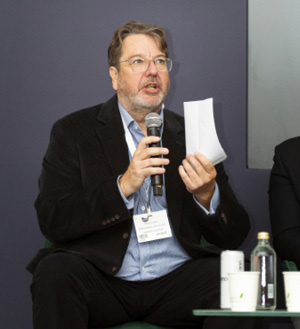 At a keynote panel at Facilities & Estates Management Live, Nigel Oseland Environmental Psychologist and Workplace Strategist, chaired a discussion on wellbeing in the workplace. Madeleine Ford reports
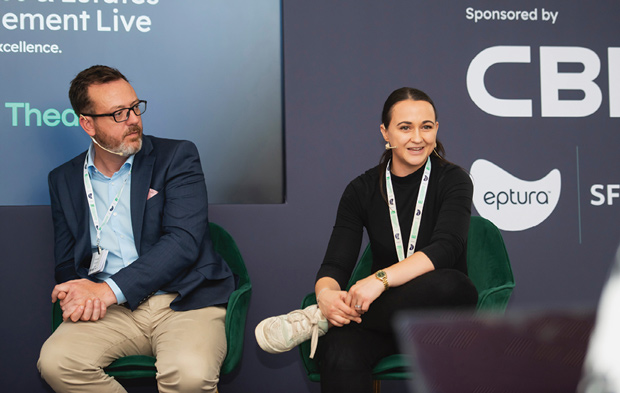
The panel, which consisted of Becky Turner, Workplace Psychologist at Claremont, Dan Johnson, Service Director for UK & Ireland at Zip Water, and Greg Bramwell, Director of Food at Baxterstorey opened with Nigel Oseland highlighting how ‘wellbeing’ has been a hot topic, and a sort of buzz word for the past 15 years.
He posed the questions, how genuine is wellbeing? Is it just a tick box exercise for our corporate and public sector? And can we genuinely enhance wellbeing in the workplace?
CURRENT PICTURE OF WELLBEING
Dan Johnson commented on how wellbeing manifests itself in the workplace and the advantages to organisations saying: “I’m quite passionate that it feeds all the way down to talent, it works its way through all the way down to people’s perception of how they are in the workplace.
“There was a study by Hayes Recruitment where 73 per cent of those that were questioned had either left or considered leaving the workplace that they were currently in, due to the level of wellbeing that they were offered.”
Wellbeing in the workplace is a big topic and feeds into the bigger picture of what people come to expect – with a certain level of wellbeing now seen as an essential. But how do organisations deliver? Does it improve performance/ reduce absenteeism?
Becky Turner explained that while it is not something you can give to individuals, when we think about wellbeing, we’ve got to break it down: “You’ve got physical wellbeing, mental or emotional wellbeing, social wellbeing, and financial wellbeing. You can provide things that support each of those factors, but importantly you can’t control the response of the individual.” She gave the example of financial wellbeing where while you can give someone a bigger salary, you can’t control how they use that money and their financial literacy, or deal with other circumstances in their personal life.
DESIGN & FACILITIES
The discussion moved from trying to determine the big picture of wellbeing to what can be done in terms of design and facilities.
Both Turner and Johnson agreed that culture can help define the wellbeing of your colleagues; that culture based on behaviours and the environment around individuals and the facilities available to them can be a real influence. Turner said that from an aesthetic perspective by simply using the right colours in a space can really help people feel more relaxed and approach situations in a calmer way. For instance, solutions as simple as the colour of the walls and acoustics of a space can really have tangible benefits.
Oseland added: “It is my personal belief that if we don’t get those basic human needs right, we will really struggle to help people enhance their wellbeing, self-esteem, sense of belonging, and self-actualisation.”
FOOD & DRINK
Greg Bramwell brought his food and beverage expertise to the discussion explaining that it is a massive part of socialisation and networking. He added: “We are finding that our top tier clients are starting to use food as medicine. They’re beginning to look at performance, at personalised nutrition plans, the opportunities of encouraging socialisation and connection and a workplace culture with food and beverages at the centre. Collaboration and trust among colleagues built on socialisation.”
Elaborating on Branwell’s points, Johnson shared his views that it is not just the choice of what is offered to people, it is how people perceive themselves fitting in with what is offered and how it is offered.
He added: “For a lot of people wellbeing is about perception. They must see that it fits their lifestyle. If you try and dictate how individuals come together it won’t be as inclusive as they want it to be.”
The panel also highlighted how when it comes to encouraging healthier choices for increased wellbeing, organisations should aim for a ‘subtle nudge’ towards such choices.
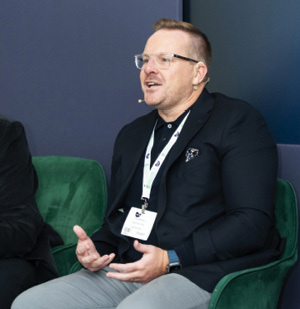 Bramwell further added how nutrition and wellbeing can tie into sustainability goals: “If you can just do great food with purpose, the connection between where you source your food, and the health and wellbeing benefits, all lines up. Food and beverage can be a great sweet spot to drive your wellbeing standards as well as drive your social connection to your ESG targets.” This also ties into the sense of belonging that is so important among employees, people want to be associated with the right company and even more so if they see it lining up with their own personal goals.
SENSE OF COMMUNITY
As Oseland pointed out, community and coming together is deeply ingrained in human nature and psychology. “Before we communicated through the written word, we would get around the fire, tell stories and share food. Our psychology has still got that natural affinity to create that environment, even in the workplace.”
This idea ties food, design and facilities all into one, creating spaces people want to come to. But how can we create those spaces and those connections?
Turner told how after speaking to some of her clients they realised their offices required different types of spaces that provided different functions, enabling employees to utilise their workplace and connect and collaborate, rather than seeking out those types of spaces outside of the workplace.
She said: “It’s creating a social heart of the office. Bringing people together with the best coffee, the best amenities in one place so that even if you’re on multiple floors, people are converging together into that sense of community and building that trust that you need for collaboration and connection with others.”
CONCLUSION
Summing up the debate Oseland highlighted the Herzberg motivational theory, which can be used for positive change in this context. It proposes that job satisfaction is driven by a set of ‘hygiene factors’ which are “basic things like safety, comfort, good environment, and good food; if you don’t get those right, it will decrease people’s performance and chance of reaching their full potential.
“But in parallel with that you’ve got to do the motivational side which is good leadership, good culture, reward, recognition, and that has to come from leadership and be genuine.”