 FMJ Facilities Management magazine providing industry-specific intelligence to FM and property professionals

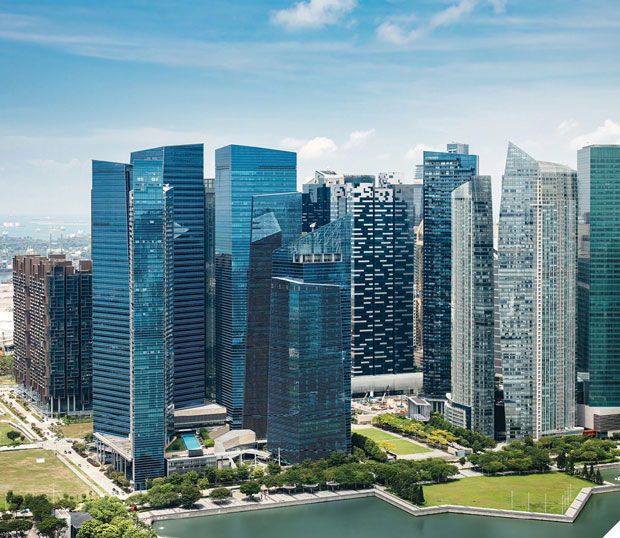
 Soundscaping is transforming workplace wellbeing and performance at CBRE’s Singapore office, helping to shape the workplace experience
As the role of the office has evolved over the past decade, organisations are rethinking how workplaces can support wellbeing and performance and encourage staff back into collaborative workspaces. While office design has long focused on how spaces look, attention is now shifting towards sound and its powerful influence on wellbeing, focus, and productivity.
For CBRE’s new Singapore office, Simon Long, CEO & Founder of Technology and AI Consultancy SQRD, envisioned a workplace where employees can choose how they work by shaping the atmosphere through the integration of carefully curated Moodsonic soundscaping technology. Valeo Technology, a specialist provider of wellbeing-led technologies, led the full design and delivery of the solution, working with local installation partner ESCO and Hewshott consultants.
“Architects have been creating visually impressive office spaces for years, but acoustics are often overlooked,” explains Marcus Rose, Owner and Director at Valeo Technology. “At CBRE’s new office, Simon wanted to bring sound to the forefront, using soundscaping to create an environment that positively impacts employees.”
 His vision was to design a space that not only looks visually striking but actively encourages people to return to the office. By creating a flexible environment that caters to different working styles and preferences, the goal was to ensure the space works for everyone. “We believe wellbeing and performance aren’t competing priorities,” says Long. “When someone is comfortable and their environment responds to what they’re doing or what they need, they perform better. And we wanted that for our people.”
AUDIO SYSTEMS
Valeo Technology meticulously planned a tailored audio system in 14 key areas using 120 BCS300 PoE speakers. Across the vast, 2,000-metre squared office, soundscaping is utilised in front-of-house and back-of-house areas, focus rooms, wellness spaces, quiet zones, bathrooms and café areas, which helped create a cohesive sound environment throughout the workplace. The space is intentionally immersive, guiding movement and behaviour through sound as much as through architecture and visual design.
The office has been deliberately split into distinct sections to support different ways of working, communicating, and interacting, encouraging choice and autonomy rather than simply sitting at a desk all day.
“We asked: what should someone feel when they arrive? What do they need when they’re focusing, or when they’re collaborating? Every decision was driven by the desired experience,” explains Long.
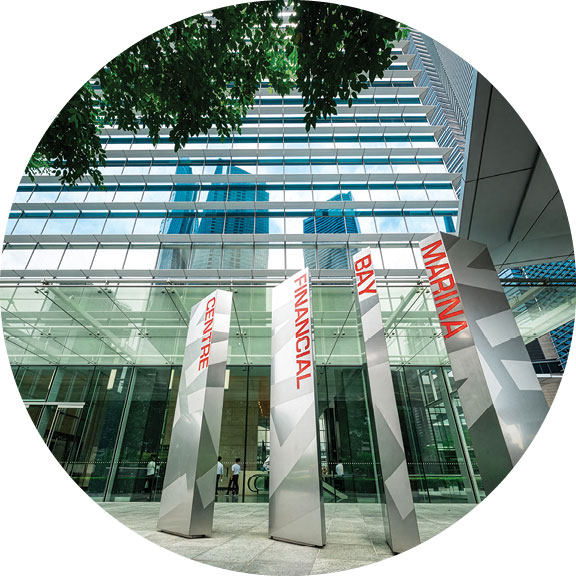
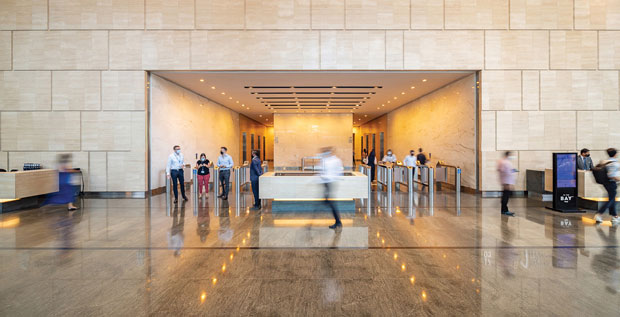
“From the moment employees step out of the lifts into the lobby, they’re greeted by an incredible view of Marina Bay and a striking video wall, with soundscaping immediately present,” adds Rose. “Audio is intentionally played only on the opposite side of the foyer, acting as a subtle wayfinding tool that guides visitors naturally towards the office.
“Staff then move into a vibrant coffee area and casual collaboration space, where the soundscape shifts to something more energetic and uplifting,” he continues. “As people move into the back-of-house working area, soundscaping clearly defines busier and quieter zones, allowing staff to choose the area best suited to their needs, from deep-focus to more dynamic collaboration.”
Moodsonic’s intelligent monitoring allows each space to adapt in real-time. “Although there are pre-defined sound profiles for each zone, the system responds to changes in noise levels,” explains Rose. “If sound levels rise, frequencies adjust to help mask speech and reduce distraction. When the noise level fades, the sound will then drop off again.
“The dedicated quiet areas use subtle, ambient sound to encourage focus,” explains Rose. “There’s a common perception that deep work requires complete silence, but for many people that can create tension. It can make people hesitant to speak or interact, which ultimately becomes counterproductive.
STRIKING THE TONE
While sound levels play an important role, the selection of sound itself is fundamental to delivering effective soundscaping. “In the lobby, we use nature-based circadian soundscapes, from gentle waves and birdsong in the morning to babbling brooks as the day progresses, creating a calming, welcoming journey,” explains Rose. “In the main working areas, we use more harmonic soundscapes.
“Traditional, lyrical music is too subjective, so we avoid it. Nature-based soundscapes tend to resonate with the majority and people quickly become accustomed to the sounds. Once they become part of the environment, they become something people genuinely value and miss when they’re not there.
Rather than relying on short audio loops, generative soundscaping continuously creates evolving sound in real time. This avoids repetition, which people can quickly notice and find distracting. By generating sound dynamically, the environment feels more natural and less artificial, helping users stay comfortable and engaged for longer periods. “The sound is made from multiple layers, and these will change depending on what is happening in the space, so no two days sound the same.”
While Moodsonic soundscaping operates as the default setting throughout the office, the system also allows for flexibility in use. For example, if teams want to change the music in certain areas on a Friday afternoon, they can temporarily switch to their preferred streaming service via the BluOS app and just as easily revert to Moodsonic when required.
BEYOND AUDIO
The system extends beyond audio alone. Valeo Technology has delivered full integration with wider smart building technologies across approximately 14 focus rooms and a similar number of meeting rooms, with sensors monitoring both lighting and acoustic levels. Lights only activate when spaces are in use and automatically adjust depending on how the rooms are being used, improving both comfort and energy efficiency.
By analysing data from occupancy, lighting, acoustic systems and even air quality, the facilities team can gain a real-time understanding of how the office is performing and makes informed adjustments when necessary. If a space is underutilised, the data helps determine whether it’s too bright, too noisy, or otherwise uncomfortable. Changes can be implemented and immediately evaluated, with alerts highlighting any significant shifts in conditions. This insight-driven approach enables continuous optimisation of the workplace environment
INSIGHTS AND MONITORING
Using Moodsonic’s insights platform, teams can also monitor what is playing in each zone, adjust volume levels, schedule changes, and switch between sound themes depending on the desired atmosphere. Access to controls is typically limited to key users, ensuring consistency across the workplace, although certain areas, such as CBRE’s wellness room, allow for occupant adjustment.
“The Moodsonic system gives us something we’ve never had before: real behavioural insight through sound data. Acoustic sensors across our 14 zones reveal not just how loud a space is, but how it’s being used,” explains Long. “Low levels indicate focused work, while higher levels suggest collaboration or calls. That insight is incredibly valuable for space planning, helping us understand whether we’ve created the right mix of environments based on how people work, not how we assumed they would.”
Supported by Bluesound Professional’s networked audio system, BCS300 speakers enabled rapid installation and flexible configuration, with adjustable post-installation zoning. Each speaker can be individually monitored and controlled via the network, allowing the team to quickly respond to issues, make remote adjustments, and receive fault reports. “Compared to traditional passive systems, which require extensive cabling and manual intervention, this approach significantly simplifies management while providing greater adaptability and long-term operational efficiency,” reflects Rose.
WORKPLACE BENEFITS
Since installation, the effect on the workplace environment and staff wellbeing has been overwhelmingly positive. “Sometimes it can take time for people to adjust to soundscape environments and find the right balance,” reflects Rose. “Valeo worked closely alongside the installation team throughout, ensuring every zone was tuned and performing to the standard we’d promised CBRE. The effort paid off, staff took to it immediately. In fact, it’s been such a success that it’s a key feature CBRE demonstrates when bringing clients through their office.”
In terms of meeting Simon Long’s vision, the outcome has been clear. “Staff feedback on the ambient sound environment has been overwhelmingly positive,” confirms Long. “The move from pink noise to biophilic, harmonic soundscapes are clearly noticeable, with some even requesting specific nature sounds. I think that speaks to how biophilic audio connects with people on a more emotional level.
“I honestly believe we couldn’t have delivered this project without Valeo,” Long reflects. “They really stepped up to our high ambitions, as this wasn’t just another off-the-shelf deployment—we were pushing into new territory with a lot of new systems and integration complexity.
“Valeo with Moodsonic delivered an exceptional outcome and exactly what we wanted to provide: a world-class workspace built for wellbeing and productivity.”
As organisations look to encourage people back into the office, experience has become critical. Sound plays a major role in this, shaping mood, behaviour, and comfort in ways that are often subconscious yet deeply impactful. Recognised as Best Corporate Office at the InAvate APAC Awards, CBRE demonstrates how soundscaping, combined with intelligent technologies, can elevate both wellbeing and performance. As Rose concludes: “It’s a real-world blueprint for how scalable, smart audio and intelligent soundscaping can elevate these types of buildings.”