 FMJ Facilities Management magazine providing industry-specific intelligence to FM and property professionals
 On World FM Day, Jamie Canter, Head of Learning and Inclusion, SBFM makes the case that tackling the FM sector’s recruitment crisis and breaking the cycle of reoffending are the same challenge, which the industry is well placed to solve.
Today is World FM Day, a time to bring those who keep our places safe, clean, and compliant from the background to the frontline. This year’s theme, “cultivating belonging through built environments,” puts a spotlight on how FM environments need to help shape inclusion.
The FM industry should be filled with opportunities for people from traditionally disadvantaged backgrounds: there are low barriers to entry, transferable skills, and clear routes for progression.
But one group often left out of inclusion conversations is the people leaving our prison system. Ex-offenders often face stigmatisation and struggle to find employment upon release, leading to approximately 30 per cent of leavers reoffending within the first year of release, and contributing to overcrowding experienced by three-quarters of prisons in England and Wales.
FM is facing its own crisis, with 68 per cent of FM employers struggling to bring in and hold onto staff. Our industry can help break the cycle of reoffending and address its recruitment struggle, but that takes structured support, mentorship, and comprehensive commitment to long-term progression.
A cycle that costs everyone
The cycle of reoffending costs everyone – it is expensive for the government, damaging for local communities, and devastating for the individuals caught in it. For many people exiting the system, the period immediately after release is one of the most precarious of their lives.
Many need to seek housing and income while reconnecting with family and reinstating their bank account. When it comes to finding employment, disclosure requirements, gaps in work history, and hiring managers’ negative assumptions can quickly work against them.
When legitimate routes to employment feel closed off, and the weight of stigma makes it harder still, reoffending can feel like the only available option.
Employers have both the opportunity and the responsibility to help break this cycle. Prison leavers represent a motivated, available pool of people actively looking for a route into stable work who just need the right opportunity. Employers need to match that enthusiasm by creating those opportunities.
Building pathways to belonging
Inclusion policies and amending recruitment structures are important starting points, but they only open the door. Real belonging requires tailored support, training, and mentorship that lead to long-term careers.
At SBFM, our Evolve scheme was designed to help those facing barriers to employment. The scheme has supported over 2,000 individuals and involves over 40 Evolve Partners, consisting of clients and industry leaders.
Evolve’s success relies on supply chain collaboration. Working with partners to identify candidates and offer joined-up support, from training through to placement, is what can give candidates actual progression. Successful Evolve candidates have become receptionists, personal trainers, and team leaders at client sites; they just need that first push.
Case study: SBFM’s academy at HMP Wealstun
SBFM works with 44 prisons, the Ministry of Justice and the New Futures Network to bring Evolve growth opportunities to people across the country. One year on from launching our cleaning training academy at HMP Wealstun, the partnership demonstrates what new career pathways look like in practice.
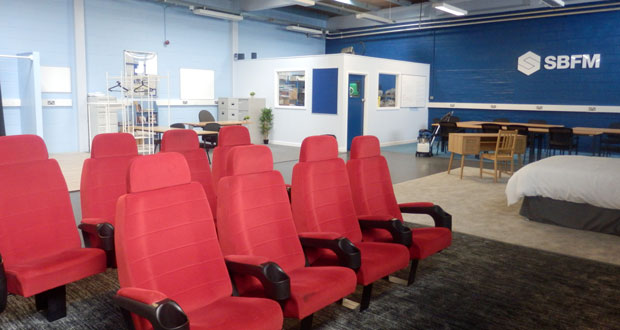
The academy, part of the Ministry of Justice’s HMP Academies Programme, operates at a category C men’s prison in West Yorkshire. Our team designed and fitted out a dedicated interactive workshop on site, complete with mock environments ranging from hotel rooms to corporate spaces, each with the appropriate flooring and fixtures to simulate real working conditions. Participants learn in these real-world environments while earning a BICSc qualification over the course of two weeks.
The programme covers practical cleaning skills alongside English, maths, and communication development, with CV writing sessions and mock interviews built in. Every participant is guaranteed a formal interview with SBFM upon completion of the course, once they have reached the end of their sentence. Our prison education and skills trainer, Amy Potts, also remains a named point of contact, offering continuity and support from the programme through to life after release.
To mark World FM Day, SBFM has developed a video to be shown directly to Wealstun prisoners. Presented by Amy Potts, it details how the academy operates and how to apply. The video aims to increase awareness of FM as a career path, to celebrate the industry and encourage participation. This is the first in a series of planned initiatives to promote FM careers within the prison.
What celebrating belonging should look like
World FM Day is the prompt our industry needs to ask: who are we still leaving out, and what are we doing about it? Ex-offenders shouldn’t feel the need to hide, lie, or pretend to be someone they aren’t to secure jobs.
Belonging doesn’t need to be a grand gesture or token inclusion policy. It should be the experience of arriving somewhere, being allowed to be yourself, and knowing that the organisation you work in is making considered decisions to help you succeed.