 FMJ Facilities Management magazine providing industry-specific intelligence to FM and property professionals

 By Dave Hawkes, Director, Houston & Hawkes
What makes someone want to come into the office? This is a question facilities managers are increasingly having to answer as organisations continue to adapt to changing employee expectations.
The ‘return to office’ has happened, at least in part. Occupancy levels across major cities, particularly London, have stabilised and in some cases continue to rise. Yet for many organisations, getting people through the door consistently remains a challenge.
The reason for this pretty clear: employees no longer see the office as the default place to work. It has to offer something meaningful in return for the commute.
For some, that means easier collaboration and better access to colleagues. Others might prioritise comfort, quiet areas for focused working, reliable technology and available meeting rooms. Meanwhile, there are certain non-negotiables, such as natural light, cleanliness, temperature control and acoustics, that shape how everyone experiences the workplace.
Food and hospitality should also be seen as part of that equation.
HOSPITALITY AND THE EMPLOYEE EXPERIENCE
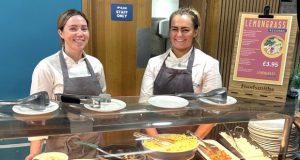
While food alone is unlikely to be the deciding factor in whether someone comes into the office, it can strongly influence whether the workplace feels transactional or genuinely welcoming. For facilities managers under pressure from the C-suite to make office attendance feel worthwhile, it’s one of the most tangible levers they can pull.
The value of food and hospitality lies less in the offering itself and more in what it signals. High-quality provision suggests that thought and investment have gone into the workplace experience. Poor quality does the opposite, reinforcing the sense that the office is somewhere employees are expected to attend rather than somewhere they choose to be. Good coffee has become symbolic of the wider workplace experience. Employees now routinely compare what is available in the office to what they can get elsewhere, especially when working from home.
Catering spaces also serve a functional role that is easy to underestimate. In many offices, cafés and dining areas are among the few environments where employees step away from desks and formal meetings. In hybrid workplaces especially, where occupancy fluctuates, these spaces help the office feel active and social rather than half-empty.
And there is also the question of trade-offs. People are more willing to tolerate a commute if the office experience offsets some of the personal cost or effort involved. Something as simple as breakfast on arrival will positively influence how employees feel about an office day overall.
This reflects the broader change in how organisations think about the workplace. FM and estates teams are increasingly taking inspiration from hotel and hospitality sectors by treating the office less like infrastructure to be managed and more like an environment to be hosted.
PERKS ALONE ARE NOT ENOUGH
This presents both an opportunity and a challenge for facilities teams. The aim should be a shift in mindset from viewing food and beverage services as office perks to a fundamental element of the broader workplace experience strategy, influencing everything from employee wellbeing and culture to occupancy levels and retention.
But authenticity matters as well. Employees tend to respond poorly to superficial perks if the wider workplace experience is frustrating. There is a growing awareness among employees of the difference between genuine investment in their experience and gestures designed primarily to justify a return-to-office mandate. Good food will never really compensate for poor management or an office that offers little functional value.
Ultimately, the organisations seeing the greatest success are the ones creating workplaces that offer experiences employees cannot easily replicate elsewhere.