 FMJ Facilities Management magazine providing industry-specific intelligence to FM and property professionals

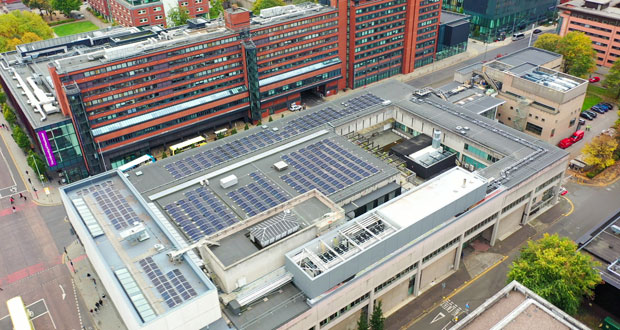
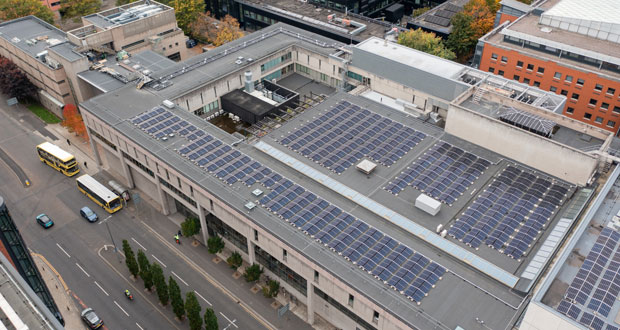
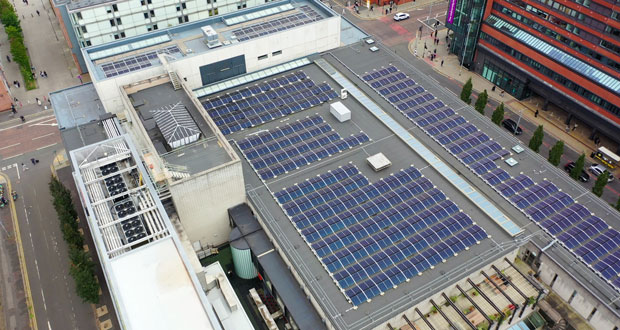
A Salix-funded roof refurbishment at the Royal Northern College of Music (RNCM) in Manchester, completed across two phases with the campus fully operational throughout, is delivering approximately 300,000 kWh of annual gas savings and potential cost reductions of up to £22,000 a year. Garland UK was appointed as the technical roofing partner for the project, working alongside Dr John Hindley of Twelvetrees Consulting, Ian Palmer Architects, and the RNCM estates team to significantly improve fabric performance and support the college’s wider decarbonisation strategy.
Why the roof is always a critical decision
In most non-domestic buildings, the roof represents one of the largest surfaces through which heat is lost. Yet roof refurbishment is frequently treated as a reactive maintenance decision rather than a strategic one. At RNCM, the existing standing seam roof had reached the end of its serviceable life and was performing poorly thermally. Previous interventions had failed to resolve complex detailing issues or meaningfully reduce heat loss.
Dr John Hindley, Director at Twelvetrees Consulting, was clear about what the brief required. “One of the precedents I set was that we weren’t doing this with 100mm of insulation. It had to be 150mm. If you’re investing public money, you maximise the fabric performance first. That’s how you reduce bills, improve comfort, and genuinely decarbonise the building.”
That principle, fabric performance before system investment, is directly relevant to any FM or estates professional planning a decarbonisation programme. Improving the thermal envelope reduces the energy demand that a new heating system will then need to meet. It is the foundation on which everything else rests.
Delivering on a live and constrained site
The RNCM project illustrates something else that matters to FM teams; high-performance fabric upgrades are achievable even in difficult operational conditions. The project was described on site as “the impossible job.” Multiple contractors were working across the roof simultaneously. Plant equipment was being removed and reinstalled as part of wider M&E upgrades. Access routes were in constant use. Teaching, rehearsals and student activity continued below throughout.
Garland UK provided system design, thermal performance expertise and on-site technical leadership to navigate those constraints. The installation was carried out by Absolute Waterproofing, a Garland UK Approved Contractor, working to Garland UK’s technical and quality assurance requirements. The roofing works were carefully sequenced around the wider programme to minimise disruption while maintaining progress.
The existing roof was overlaid rather than stripped out, which avoided unnecessary waste to landfill and allowed the work to proceed at pace despite ongoing site complexity. The insulation build-up was increased to 150mm PIR, taking the roof U-value from 0.24 W/m²K to 0.10 W/m²K.
 Dan Crowley, Garland UK Technical Manager, was present from the initial survey through to completion. “This wasn’t a standard refurbishment. With multiple trades, plant movements and live interfaces, the roof had to work in the real world, not just on drawings. Our role was to make sure the system delivered performance, buildability and long-term resilience at the same time.”
Measuring what actually changed
One of the most useful aspects of the RNCM project is the quality of evidence it generated. The college carried out pre- and post-project environmental monitoring across teaching and practice spaces, using room sensors to track air quality, temperature stability and humidity.
The results were clear. Internal conditions shifted from poor and inconsistent to stable and well-controlled. In practice rooms, where temperature and humidity directly affected the use of the space, this had an immediate and tangible benefit for students and staff.
For FM professionals, this underscores the value of incorporating measurement into any fabric upgrade from the outset. Data gathered before and after an intervention makes the case in concrete terms, and for teams pursuing programmes like Salix, evidenced outcomes are central to how funding is justified and secured.
Long-term risk and planning confidence
Upon project completion, Garland UK provided a 25 year Single-Point Guarantee covering the roofing system design, materials, and installation workmanship under a single accountable party. For a busy education estate managing forward maintenance planning and capital budgets across multiple assets, this matters. It removes ambiguity about future liability and allows the estates team to plan with confidence.
Dr Hindley reflects on what the project ultimately delivered. “The college is really pleased that it’s got a roof system it’s not going to have to think about for many years. That confidence is important when you’re planning properly and trying to reduce risk across the estate.”
The RNCM project is a practical demonstration that a well-specified roof refurbishment can serve as a cornerstone of a decarbonisation programme, not an afterthought. For FM and estates professionals under pressure to show measurable progress, that is a useful place to start.