 FMJ Facilities Management magazine providing industry-specific intelligence to FM and property professionals


 Stefania Vatidis, Growth Marketing Manager at dynamic workplace solutions provider HubStar explains why underused offices are an environmental problem – and how data can fix it
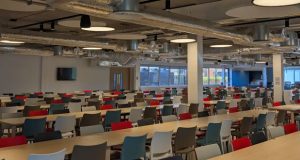
Discussions about office sustainability tend to focus on solutions such as green building certifications, energy-efficient systems, and sustainable materials. However, in many offices, a significant environmental cost is hiding in plain sight in the form of underused desks, meeting rooms that are booked but not used, and partially unoccupied floors that continue to consume energy every day.
Wasted space directly increases carbon emissions through unnecessary heating, cooling, lighting, and cleaning. And this ‘hidden’ environmental inefficiency in modern offices has accelerated in recent years as the hybrid work model has increasingly become the norm.
With many workplace leaders still struggling to introduce an effective hybrid strategy, office buildings now often operate with fluctuating occupancy levels. This shift has created unprecedented challenges for facilities managers when it comes to trying to identify where to cut back. For example, a conference room might be used for only a few hours each week; desks may sit empty for days at a time; and, on some days, certain floors may only be half full.
Yet many offices continue to run as if every square metre is fully occupied every hour of the day. Even partially empty buildings often operate as if they are fully occupied – with equipment, lighting and HVAC systems running regardless of actual occupancy. Additionally, cleaning and maintenance schedules are often fixed instead of being based on usage.
WASTED SPACE
Similarly, unintentional waste is created when employees use workspaces with more equipment and resources than they need, which results in devices, screens and other facilities drawing power unnecessarily. For example, an informal two-person meeting in a 20-person meeting room results in excessive use of lighting, heating, cooling and ventilation, and the room will have to be cleaned afterwards, whereas a two-person pod or small meeting room would have been more emission friendly.
All of this ‘hidden’ waste creates avoidable emissions that increase an organisation’s carbon footprint. Much of the problem is down to the limitations of conventional space planning – a hangover from the days when offices were designed around assigned desks and predictable attendance. The expanding gap between designed capacity and actual use has been amplified by the growth of hybrid work.
However, this sustainability problem has a simple, cost-effective solution: better use of accurate occupancy and space utilisation data.
Insightful data analysis of occupancy data, booking insights, and sensor data offers ways of identifying where improvements can be made in the pursuit of sustainability.
With the latest advances in AI-driven workplace technology, FM teams have been given new tools that enable them to gather and analyse more accurate workplace data. This, in turn, provides a much better understanding of real demand for space and resources that can help them make more informed decisions about building maintenance and energy management.
REAL-LIFE USAGE
Occupancy sensors and Wi-Fi usage data can track actual presence in rooms and zones. Smart desk and meeting room booking data can reveal patterns of demand, and access control or entry data from badge scans can help FM managers to identify peak attendance days.
In addition, a new generation of utilisation analytics tools can now accurately identify true workplace usage patterns, including weekly attendance trends. This can help pinpoint specific zones and neighbourhoods where utilisation rates may be low on specific days each week.
These advanced analytic tools can also be utilised to flag up consistently underused spaces that could be adapted for other purposes to help reduce wasted space and resources. For example, unused desks could be transformed into quiet zones suitable for focused work. Conversely under-utilised spaces might be turned into popular collaboration zones to foster teamwork and creativity (HubStar’s latest Hybrid Occupancy Index report found that collaboration areas and social spaces saw the largest increase in utilisation in 2025).
SUSTAINABLE INSIGHTS
FM teams can use important insights to help meet sustainable goals. For example, by identifying in real time which areas are not being used HVAC schedules can be optimised to only heat or cool occupied zones. Similarly, lighting may be automated to ensure lighting usage is adjusted according to occupancy.
A data-driven approach will also enable flexible, dynamic cleaning schedules to be introduced for spaces that may be heavily used one day and empty the next. This approach will direct cleaners to concentrate on the areas that have been used each day, rather than a daily cleaning routine that covers the whole building.
By aligning building operations more closely with accurate data and real-time space utilisation in this way, FM teams can dramatically reduce energy waste. Accurate data can also be used to further reduce energy consumption, as well as lower operational costs, by closing unused floors or zones on low-attendance days.
While many sustainability improvements require expensive building upgrades, data driven space optimisation can deliver a significant impact by using existing infrastructure more efficiently and reducing unnecessary operations. This makes it a fast, reliable and cost-effective sustainability strategy that does not require large capital investment.