 FMJ Facilities Management magazine providing industry-specific intelligence to FM and property professionals

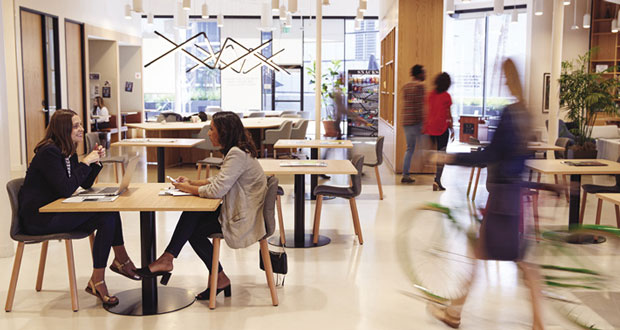
HubStar, an industry leader in dynamic workplace management technology, recently hosted the latest quarterly ‘Workplace Connect’ event in London. It brought together senior workplace leaders for in-depth discussions on the challenges, priorities and opportunities shaping the modern workplace.
The attendees offered perspectives from Corporate Real Estate (CRE), HR, IT, workplace experience, and more.
The discussions revealed that more organisations are now aligning their workplace strategies around three core priorities:
- Creating workplaces that genuinely ‘earn the commute’.
- Building a more complete and accurate understanding of space utilisation through combined data sources.
- Embracing more agile, forward-looking approaches to space planning.
Other key takeaways from the Workplace Connect – Q1 2026 event include:
1. Shift from mandating attendance to designing compelling experiences
With the office now competing directly with the home, more organisations are aiming to make their workplace feel more desirable – and less obligatory – by offering compelling experiences rather than simply issuing return-to-office mandates.
However, senior and junior employees are still more likely to attend the office than mid-career professionals. As a result, workplace leaders are now having to design workspaces for diverse expectations across workforce segments. Persona-based workplace design is emerging as a potential solution.
2. Redefining where the workplace begins
There is a growing recognition that workplace experience now extends beyond the office itself, with employees’ commute to work—and even their modes of transport—increasingly seen as part of the experience. This is leading some organisations to adopt a more holistic approach to ‘earning the commute’ in order to attract people back into the office.
3. Use of AI tools becoming more strategic
The discussions highlighted a growing shift towards the use of AI tools for strategic purposes not just operational tasks. While attendees acknowledged that AI is likely to reshape future workforce and workplace needs, the long-term implications for space and planning are still unclear.
4. Growth of data-led workplace design
Workplace data is increasingly being used to inform design decisions. There is also a growing recognition that the true value of the data lies in the actionable insights it provides, not just the ability to collect more granular data. Attendees also stressed the importance of data being interpreted by people rather than leaving it to AI.
5. ‘Always evolving’ workplaces are the new standard
The ability to adapt space quickly is becoming increasingly critical. There is also a clear shift towards more modular, reconfigurable workspaces to support both collaboration and deep work. As a result, workplace design is now seen as a continuous function rather than a one-off.
Concern about the emerging link between environment, employee attention spans, and quality of work is leading to greater use of workplace design to help maintain concentration and reduce distractions.
6. Productivity still difficult to define and measure
Defining and measuring productivity in the hybrid era remains difficult because it is increasingly influenced by multiple factors beyond the workplace. There is growing interest in balancing this complexity with practical insights. For example, more organisations are looking to shift from traditional productivity metrics to simpler, more human-centric measures (such as employee sentiment).
Joe Harris, HubStar’s Director of Business Development, said: “It was clear from the Workplace Connect discussions that the modern workplace is becoming increasingly complex. Success will depend on an organisation’s ability to balance accurate data with human insight and to evolve the workplace into a strategic asset that supports both people and business performance.”
Workplace leaders and FM, HR and IT managers can obtain a free copy of the Workplace Connect Q1 2026 Report directly from the HubStar website here.
FMJ and Watco Webinar: Meeting compliance in a new culture of accountability
From January 2026, the Building Safety Regulator (BSR) formally separated from the Health and Safety Executive (HSE). Created under the Building Safety Act 2022 in response to the Grenfell Tower tragedy, the BSR is designed to raise safety standards across the built environment and introduce a stronger culture of accountability, transparency, and proactive risk management.
This shift places facilities managers in a more strategic safety assurance role – far beyond routine maintenance.
FMJ and Watco are hosting a webinar on 22 April at 11:00am to explore what this new regulatory landscape means for FMs. To register for the webinar click here.
Can’t make it no problem…
Simply register above and after the webinar has been broadcast, we will send you a link to watch the recording.