 FMJ Facilities Management magazine providing industry-specific intelligence to FM and property professionals

 Clare Martin, Founder of the Wellbeing Ambassador Programme and Owner of Goldcrest Training and Patrick Martin, Sanaway Washroom Services Co-Founding Director, discuss supporting workplace wellbeing through smart washroom facilities provision
UK sickness absence data shows that an estimated 148.9 million working days were lost to sickness or injury in 2025, averaging 4.4 days per worker.(i) Mental health remains the leading cause of long-term absence, with 41 per cent of organisations reporting it as their top concern.(ii)
HOW CAN THE WASHROOM CONTRIBUTE TO WORKPLACE WELLBEING?
Clare Martin explains: “When supporting people at work, conversations often centre on compliance: what are we legally required to provide? Forward-thinking organisations ask a different question: what do our people need to thrive? The shift from compliance to proactive care represents a fundamental change in how businesses approach wellbeing. Providing inclusive washroom facilities helps support a systemic approach to wellbeing by recognising that basic needs must be met for people to psychologically thrive.”
GO BEYOND THE LEGAL REQUIREMENT
Traditionally, washroom hygiene services have focussed on hand hygiene, air quality and feminine hygiene disposal units, but while businesses must legally provide a means of sanitary disposal, even if they employ only a single female staff member, no law requires the same for men. Yet according to The Prostate Project, one in eight men (one in four for black men) will get prostate cancer(iii), making it increasingly important to provide men with access to hygiene disposal units to discreetly dispose of male hygiene products.
Says Clare Martin: “Legal compliance highlights a bare minimum rather than what is needed to create a culture where people feel seen, supported and enabled to thrive. It is a positive step to see organisations introducing hygiene disposal units into the male washroom environment for those coping with male urinary incontinence due to aging or prostate cancer treatment.”
Sanaway Washroom Services Co-Founder, Patrick Martin adds: “The conversation can be widened still from simply menstrual health and prostate cancer, in fact it’s so much more, since it is estimated that one in 10 people suffer with urinary incontinence in the UK, and men, women and children can all be affected.”(iv)
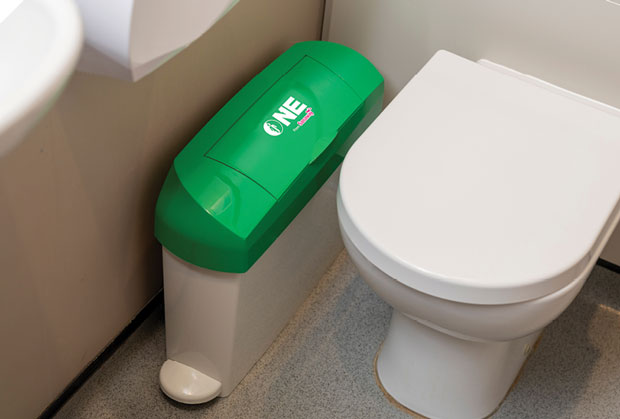 Universal hygiene disposal units should be accessible in all washrooms, regardless of gender, to all people experiencing urinary incontinence issues which may be related to conditions such as the menopause, a stroke, dementia, obesity and prostate cancer, or because of disability and certain neurological conditions. The use of some medications may also cause temporary incontinence issues.(v)
Says Patrick Martin: “Some employees may also require bulk waste disposal. Without addressing such issues in the workplace, mental health, anxiety and depression may lead to lower productivity and absence from work.”
Clare Martin agrees: “You simply cannot support emotional and psychological wellbeing if basic physical needs aren’t being met. By providing access to universal hygiene disposal units and bulk waste removal bins in all washroom environments (not just where legally mandated) you will be addressing a genuine physical necessity. This isn’t just compassionate; it’s recognising a widespread physical reality that impacts workplace wellbeing.”
The first challenge for leaders is to build a thriving workplace that supports people across every aspect of wellbeing says Claire Martin. “Facilities and HR managers often benefit from training on workplace wellbeing so they can take the lead on improving systems and services to meet employee needs,” she explains. “Goldcrest’s Wellbeing Ambassador Programme does just that and the data shows that 92 per cent of leaders feel better equipped to support their people and 88 per cent report improved personal wellbeing.
“The outcomes are clear. When leaders have the confidence and tools to support the whole person and better understand their people’s needs, organisations report reduced absence, improved retention, and enhanced engagement. These aren’t marginal gains; they represent fundamental shifts in how organisations operate.”
SUPPORTING A CULTURE OF WELLBEING THROUGH WASHROOM SERVICES
Sanaway Washroom Services developed it’s ‘ONE’ service to normalise the presence and use of a universal hygiene unit that can be used by everyone who needs them, regardless of whether they use male, female, unisex, or accessible washroom facilities.
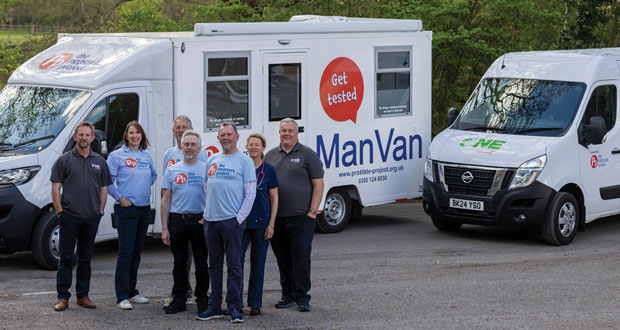
Patrick Martin says: “Through our partnership with The Prostate Project, all ‘ONE’ customers receive cubicle posters informing male employees on the benefits of having a simple PSA test used to help detect prostate cancer. We also encourage ‘ONE’ customers to invite The Prostate Project’s mobile ‘Man Van’ PSA testing facility onto their premises to offer a PSA test to all male employees.”
As a result of this joint wellbeing initiative, Mike Collins, Trustee of The Prostate Project recently led a PSA testing day, taking the Man Van to a Sanaway ONE customer.
 He explains: “The Prostate Project tested 46 employees at this one site, and to-date at least one male employee was referred on for further investigations. That’s potentially one life saved. Statistically, this is correct with normally one in 40 tests requiring further investigation.
“It’s well documented that men are less likely to take control of their health or talk to someone if they are worried about health issues. Caught early, prostate cancer is usually curable. This washroom initiative helps educate men who may be at risk of prostate cancer and makes taking a test at work an easy way to conduct a quick health check without booking time off work to do so.”
Patrick Martin adds: “Employees visit the washroom space multiple times each day making it the ideal place to share concise health information to support physical and mental wellbeing. Correctly specified washrooms with hygiene disposal units available in all washrooms for everyone who needs them helps reduce stigma and embarrassment and normalises conversations around a range of physical health conditions, therefore businesses should not underestimate the role washroom facilities can play in supporting workplace wellbeing.”
Clare Martin agrees: “Inclusive, hygienic washroom facilities that share responsibly sourced public health information are foundational for mental, emotional and physical wellbeing. Organisations that embrace these needs and recognise the importance of a whole approach to wellbeing see improved staff retention and increased productivity, so your CEO will likely thank you too.”
REFERENCES