 FMJ Facilities Management magazine providing industry-specific intelligence to FM and property professionals

 Lewis Berry: Author of The Down-To-Earth Guide to Lightning Protection Testing & Inspection and Founder of the Down-to-Earth Group with advice on practical compliance challenges and responsibilities for system maintenance
Lightning protection is often regarded as something of a ‘dark art’ and a bit of an afterthought in building maintenance until the annual test and inspection date arrives. Yet upon completion of the test, how many facilities managers receive their lightning protection test report back marked as a FAIL? This can be frustrating, especially when the previous contractor had issued a pass, yet no changes have been made.
Before accepting any remedial works, it is important to understand exactly why an item has been identified as non-compliant and what the proposed work is intended to address.
ISSUES IDENTIFIED DURING INSPECTION & TESTING
One of the most common recommendations seen during inspections is the bonding of rooftop plant and metallic services. The general assumption is that all metallic items and services automatically require bonding into the lightning protection system (LPS), but that is not that straightforward. This is a ‘throwback’ from the previous standard BS 6651, which was in use from 1985 until it was officially withdrawn in 2008.
The current standard of LPS now looks at ways of creating ‘zones of protection’ for such items rather than connecting everything to the system. Bonding should be a last resort and only used when the required separation distance cannot be achieved. Separation distance is the minimum physical distance that should be maintained between an item of equipment and lightning conductors to reduce damage from dangerous lightning energy.
Bonding every piece of plant into the LPS can increase the risk of damage to the equipment and become a major fire risk to the structure, whereas creating a zone of protection with air terminals is a much safer and recommended approach, as per the latest standard for lightning protection: BS EN IEC 62305.
Other frequently identified issues include:
- Continuity problems where metallic cladding, capping, handrails or roof metalwork, such as lead, have been utilised as part of the system.
- Corroded joints and test clamps.
- Waterlogged or inaccessible inspection chambers.
- High earth resistance readings.
COMPLIANCE DOES NOT ALWAYS EQUAL PROTECTION
Another important consideration is the standard to which your system was installed, and whether it meets modern-day requirements and safety considerations. Older legacy systems are only ever tested to the standards of installation at the time they were installed.
This means that you could receive a pass certificate claiming compliance with an older standard; however, your structure, occupants, and/or electrical infrastructure are not necessarily protected by today’s standards. This is an important distinction to make.
Some of the most common examples of this can be:
- Buildings with no surge protection.
- Buildings with an inadequate number of conductors.
- Buildings without the use of air terminals for the protection of sensitive rooftop equipment.
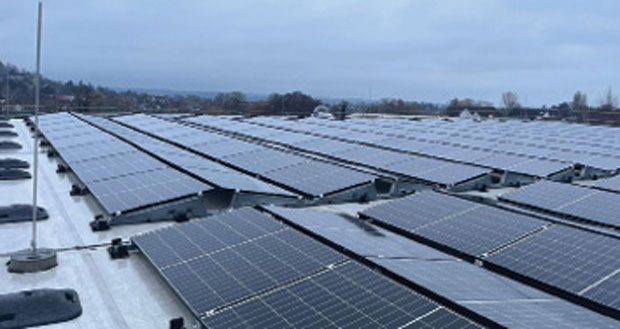
Structures evolve over time, therefore the LPS may need to be re-evaluated to fit the building’s needs. One such evolution is the addition of PV Solar arrays at roof level. These are often installed after the original LPS and are at risk of direct strike. Bonding alone will not necessarily protect them from damage, and they should be protected via a series of air terminals.
The key question that facilities managers should be asking their LPS provider should not be: “Has my system passed inspection?” Instead, they should ask: “Does my LPS provide adequate protection for my building, its occupants and its critical equipment?”
Some buildings may also have ESE (Early Streamer Emission) systems installed. These are essentially large metallic poles installed at roof level, which are claimed to provide enhanced protection without the need for extensive roof conductors and down conductor networks.
However, it is important to note that these systems are not recognised under British Standards, and your building may not meet its insurance obligations in the event of a lightning-related incident.
UNDERSTANDING NON-COMPLIANCE
Not every remedial flagged within an inspection report carries the same level of risk, and understanding the difference can help facilities managers make informed decisions.
Some may find actual flaws, such as corroded test joints, damaged components, or continuity issues that have an impact on the system’s performance. Others might be more superficial or not required at all, especially if a new system is being tested using outdated criteria from older standards. Understanding the reasoning behind recommendations allows maintenance budgets to be prioritised effectively, while guaranteeing that genuine issues are addressed appropriately.
WHAT ARE WE TRYING TO ACHIEVE?
Lightning protection systems are designed and put in place to intercept lightning energy and channel it safely to the ground, where it can be dissipated.
These do the following:
- Prevent structural damage.
- Reduce fire risk.
- Protect occupants.
- Safeguard electrical systems.
- Maintain business continuity.
The objective of inspection and testing should extend beyond tick-box compliance, and instead, it should provide the building manager with confidence that the system continues to protect the building, its occupants and its critical infrastructure in the way it was intended.
In association with https://downtoearthgroup.co.uk