 FMJ Facilities Management magazine providing industry-specific intelligence to FM and property professionals

CUSTOMER CARE
DMA services a range of sectors, including educational, high-end residential properties, commercial offices, charities, hotel groups, retail, leisure, and health and social care settings. Recent wins include two local authorities, Thurrock Council and the London Borough of Sutton.
Within the company the support function includes a planning team, a team that looks after the service partners and a team of maintenance engineers. An important part of any mobilisation process explains Bennett is in ‘man marking’ through every layer of the customers’ organisation, so each of the parties know their counterparts throughout the chain.
She explains: “Once we’ve won a contract, that’s when we engage the whole team. It’s not just one person mobilising the contract, we involve the operations manager along with the account manager because that will be the golden thread. At every layer we want to have a contact who we’re actively engaged with, as it’s all about maintaining the relationship throughout the lifetime of that contract.”
While software plays an important part, for instance, once all the assets are loaded and task times allocated BiO can help automate processes such as the scheduling, Bennett is adamant the tech can’t wholly replace people with automation. This is why customer service maintains contact with the customers to let them know of any changes, acting as their first point of call.
She admits however, that when showcasing BiO to potential customers, some prefer traditional T card (jobs) systems.
“You’ve got to explain the art of the possible because this industry can be slow to change. We need to engage and showcase the benefits of tech. First and foremost, it’s about the people and the engagement that allows you to leverage the technology”.
“Tech should support the process that supports the people to do their job, not the other way around. We don’t go and blind them with BiO. We use it as a vehicle to show them how we run the business, and that always gets their interest.”
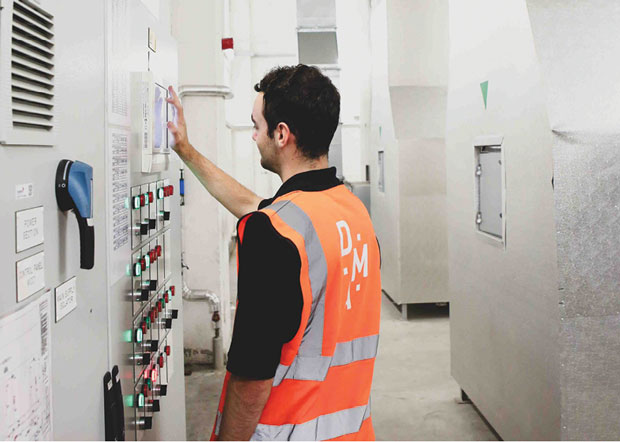
Another key innovation for DMA Maintenance is the creation of a new technical services division split into core trades, HVAC, electrical, gas and mechanical, with a technical services manager responsible for each discipline to which the field service engineers report. This arrangement enables the business to scale up or down for larger or smaller jobs, makes sure that everybody knows what their roles and responsibilities are and that there are accountabilities for each of those areas.
“With this approach, when we’re quoting for smaller projects that don’t require our projects team, we’ve got a technical oversight on how we price for that and how we manage the service partners, which is equally important, because for me, they’re an extension of our own workforce.”
FUTURE PLANNING
According to Manpower Group the UK Mechanical and Electrical (M&E) sector faces an acute talent shortage, and the dearth of women in senior roles within the FM sector is well documented.
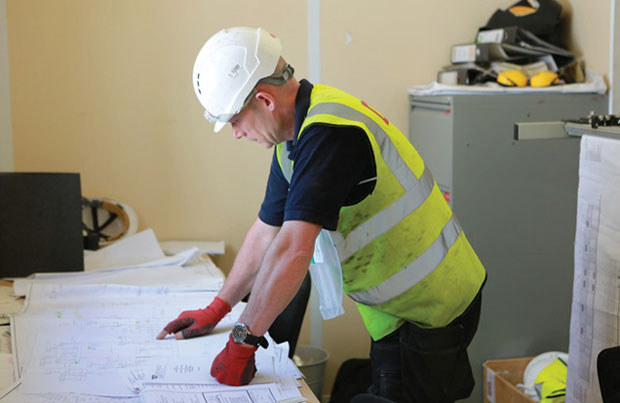
This is why Bennett is very passionate about running apprenticeships and business mentoring initiatives to help foster its future talent, as well as encourage more women into the profession. She recently joined a business mentoring programme with Year 10 students who might want to get into the industry, whether in a maintenance or customer services side.
Bennett had previously introduced an apprenticeship programme at Aqualisa and took a similar approach when joining DMA. She also feels strongly that an apprenticeship should always lead to a full-time role, so each recruit is teamed with vetted training providers to deliver tailored apprenticeship pathways across multiple disciplines.
“Part of what we do is upskilling,” she explains. “For example, an electrical engineer who then undertakes a gas fitting qualification. We will invest in training as we aim to retain staff and those who have the right attitude will be supported in their learning.”
Looking to the future, Bennett believes the foundations are in place to scale up the operations by winning more work without losing quality. DMA is now on several frameworks, allowing them to prioritise working with organisations that have the same vision, which makes them more selective in what they do.
She says: “I’d say the last two years have all been about building the foundations, getting the basics right and having the processes and the teams in place to be able to support that growth. I think SaaS opens up opportunities outside of maintenance and projects, which as a business is very exciting.”
Finally on the issue of seeing more women in senior FM maintenance roles, says Bennett: “I loved my previous role and I love this one. It is challenging and you know, I think as a woman in this industry, it’s very easy to have imposter syndrome. But by continuing to do what I do, and engaging people and the team around me, we will succeed. Without them, we wouldn’t be where we are.”