 FMJ Facilities Management magazine providing industry-specific intelligence to FM and property professionals

 Paul Markey, Head of Sales and Accounts at Lolly on the growing role of digital signage in modern facilities management to enhance communications, workplace experience and operational efficiency
Digital signage is becoming an increasingly valuable tool for facilities managers and catering operators looking to improve efficiency, communication and customer experience across busy environments. While screens have long been used for static menus or announcements, today’s systems are far more dynamic and integrate with wider operational platforms to support real-time decision making.
Across sectors such as higher education, healthcare and workplace catering, signage is now playing a central role in how services are delivered.
CUSTOMERS & COMPLIANCE
One of the most immediate benefits is its impact on customer flow. In high-footfall environments, queues can quickly build at peak times. Digital signage allows operators to respond in real time by updating menus, highlighting alternative options or promoting quieter service points to help distribute demand more evenly.
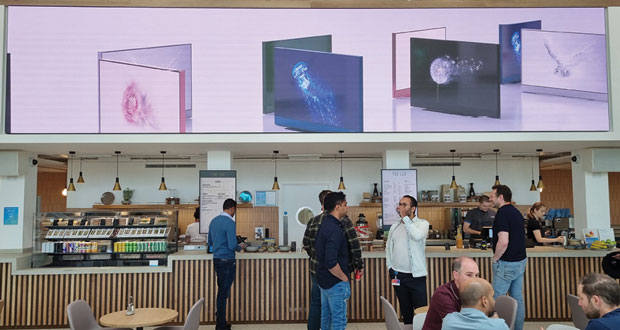
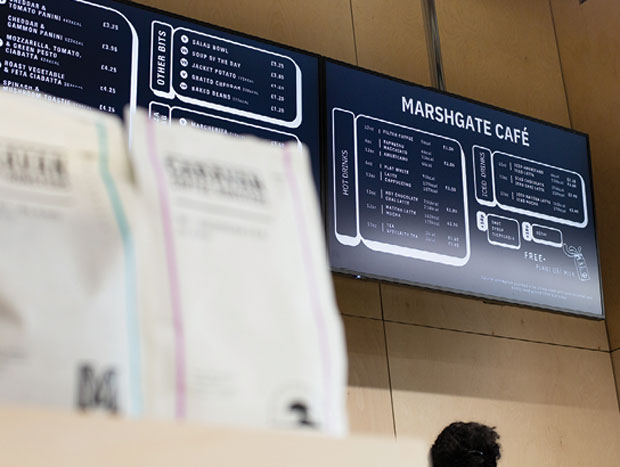
At Bristol University, for example, digital signage is being used at a highly advanced level within a catering environment. Multiple screens, from menu boards above counters to larger feature displays, are all connected to a central system. Menus change dynamically throughout the day, with updates to pricing, availability and product information reflected across all screens within minutes. This creates a more responsive service and ensures customers always see accurate, up-to-date information.
This kind of real-time integration is becoming increasingly important, particularly when it comes to compliance. With growing focus on allergens, nutritional information and sustainability, signage provides a clear and consistent way to communicate information at the point of decision. When integrated with back-of-house systems, updates can be made centrally and reflected instantly across all displays, reducing the risk of error.
MULTI-SITE MANAGEMENT
Another area where digital signage is delivering value is in multi-site estate management. For operators managing multiple locations, maintaining consistency while allowing for local flexibility has traditionally been a challenge.
At the University College London (UCL), signage is deployed across multiple campuses within close proximity, each with its own screens and requirements. While all locations sit under a single central system, individual sites retain control over their own content. Core messaging can be shared across the estate, while menus and promotions are tailored locally.
For facilities teams, this provides a scalable way to manage communications across complex estates without adding operational burden.
DIGITAL ADOPTION
The retail sector is also seeing growing adoption. At Sandpiper, a leading franchise partner for Costa Coffee in Gibraltar, digital signage has been used to support in-store communication and improve visibility of offers and menu items across its estate. In fast-moving retail environments, where promotions and product availability can change frequently, signage provides a flexible way to keep information current while enhancing customer experience.
Healthcare environments are beginning to explore the potential of signage in similar ways. At King George’s Hospital in Ilford, digital signage has recently been introduced as part of a phased rollout. While still developing, the aim is to support both catering operations and wider communication needs. In settings where clear, accessible information is essential, the ability to update messaging quickly and remotely can make a significant difference.
Beyond catering, signage is increasingly used as a broader communication tool. Screens can be repurposed outside service hours to display travel updates, weather information or general announcements. This extends their value, particularly in environments that remain active throughout the day and evening.
SUSTAINABLE SOLUTION
Sustainability is also influencing adoption. While digital screens require energy, they reduce reliance on printed materials that quickly become outdated. Many systems allow screens to be scheduled to switch off outside operating hours, helping to minimise energy use and extend equipment lifespan.
Importantly, digital signage is most effective when integrated with wider systems. When linked with EPOS and kitchen operations, signage can reflect live data, from stock levels to menu changes, creating a more seamless experience for both customers and staff.
As expectations around speed, transparency and flexibility continue to rise, facilities teams need tools that can adapt in real time. Digital signage is no longer just about displaying information. It is about improving communication, supporting efficiency and enabling more responsive operations across increasingly complex environments.