 FMJ Facilities Management magazine providing industry-specific intelligence to FM and property professionals

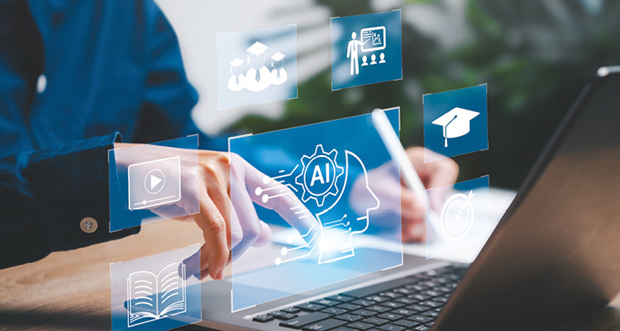
 Habiba Khatoon, Director of Robert Walters Midlands delves into the benefits and pitfalls of the increasing application of AI in UK hiring
AI is now an embedded part of hiring practices across the UK. Employers are using these tools to draft job adverts, streamline communications, as well as screen and match profiles, while jobseekers are crafting their CVs with AI, receiving real-time interview assistance and applying for roles en masse.
Both sides are reaping the benefits in terms of speed and productivity, but they must now navigate new risks of bias and eroding authenticity.
In this current environment, employers who prioritise balance will gain the competitive edge. This means auditing AI tools to get consistent results, keeping humans at the heart of decision-making for fairness and trust and using AI to enhance and not detract from the candidate experience.
HOW AI TOOLS ARE TRANSFORMING RECRUITMENT
- Screening, matching and ranking – Job ads are receiving more applications than ever, making effective shortlisting more vital but even more challenging. AI-powered screening tools promise pace and consistency by instantly reading job descriptions and ranking candidates against them. These systems do still carry significant risks in amplifying bias at scale and losing the contextual nuance that only humans can provide.
Tools include LinkedIn’s Hiring Assistant, SeekOut, Eightfold AI and Entelo. - AI-powered candidate engagement – Candidate communication is one of the fastest-moving areas of AI adoption. Outreach once relied on recruiters drafting every message, now, new tools can generate personalised emails in seconds. Early adopters are already seeing increased response rates and faster replies as a result, with emerging data suggesting that candidates are responding 10 per cent faster. However, success relies on structured human oversight to keep AI-generated messages accurate and relevant.Tools include LinkedIn AI Assisted InMail, Copilot.
- Instant job ad copywriting – Before AI, recruiters would spend hours crafting and adapting templates, finding the right tone and tailoring language to attract the right people. Today, AI can generate polished ads in seconds. With tools like Textio flagging biased phrasing (e.g. “competitive” skewing male, “supportive” skewing female). Yet an overreliance on these AI outputs without the necessary refinements risks stripping ads of an employer’s unique voice and introducing avoidable errors.
In February 2024, Robert Walters launched a bespoke AI Ad Writer trained on our recruiters’ best practice. It reduced time spent on creating ads from one hour to 90 seconds, giving our teams more space to refine and perfect. Within the first three months of introducing the tool, our AI-written ads received 68 per cent more applications.
GROWING RISKS
Artificial intelligence is being woven directly into daily hiring processes, in turn creating new skillsets for both recruiters and hiring managers. Copilot, ChatGPT or Claude all demand prompting know-how which is shifting hiring skills from writing to directing.
Regardless, it remains crucial these tools aren’t leant on as a standalone solution. As AI does more, there is a danger of removing a crucial layer of human insight that distinguishes true fit from mere ‘algorithmic’ match.
The more employers use AI to filter prospective hires, the more jobseekers will use it to beat the filters. This could lead us closer to recruitment processes that are effectively AI interviewing AI, introducing additional risks like amplified bias, overlooked candidates, and ultimately, poorer hiring decisions.
A CONSISTENT HUMAN THREAD
Human judgement must remain a constant within processes, even as AI usage increases. To achieve an accurate assessment of a prospective employee’s suitability, certain elements should be non-negotiable:
- In-person interaction.
- Live exercises.
- Portfolio reviews.
- Peer or panel introductions.
- Skills-based assessments.
Specialist recruitment partners play a pivotal role in helping to reduce the noise through producing strong, succinct shortlists of appropriately skilled professionals.
We believe human interaction is where the real differentiation happens, by meeting all of our candidates face-to-face, we can discover the qualities that go beyond what’s written in an online application.
The strongest candidate for the job isn’t always the one who looks strongest on paper, and you would never spot that from a CV alone, particularly an AI-enhanced one.
FINAL THOUGHTS
AI is undoubtedly transforming hiring processes. However, without careful application organisations risk weakening trust in their own processes.
The most effective approaches will be those rooted in human judgement, ethical usage, and transparency.
AI should be used to clarify hiring, not replace it. Technology can optimise, but our insight is the factor that will ensure the right decisions are made and the best people are hired.