 FMJ Facilities Management magazine providing industry-specific intelligence to FM and property professionals

 Graham Crisp, National Key Accounts Manager, Zip Water UK explains why workplace water filtration is becoming a bigger priority for facilities managers
Workplace drinking water provision used to be seen as a simple, readily available utility and a space for employees to congregate for conversation. But expectations are changing.
While still a place to congregate, it wouldn’t be too surprising for a conversation at the water cooler to be about water itself, given the prominence of PFAS – ‘forever chemicals’ in the news and a growing public interest in what we consume.
Facilities managers are responsible for employee wellbeing, water quality, sustainability and compliance, with the workplace experience moving higher up the agenda. With growing media attention and the recent launch of the UK Government’s first national PFAS Plan, a renewed focus is being placed on drinking water provision.
Published in February 2026, the government plan sets out coordinated action to understand PFAS sources, pathways, and exposure. Although for FMs, concerns around water quality go beyond just PFAS, the plan is a timely reminder that confidence in workplace drinking water matters.
WATER IN THE WORKPLACE
With more strategic responsibilities, FMs are expected to deliver workplaces that are healthier, more sustainable, and more efficient to run. Drinking water sits across all these priorities; it affects how people feel and hydrate, their productivity and how many plastic bottles a workplace consumes.
This makes drinking water and filtration more than a technical specification. It becomes part of how a building supports the people inside it and how confident they are in the facilities they work in.
WATER QUALITY
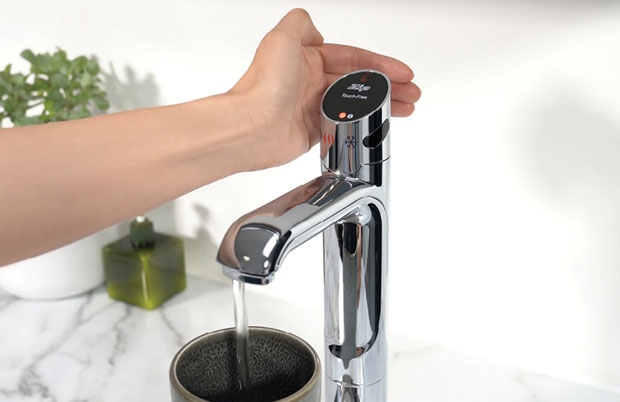
Water quality can vary depending on location, supply source, treatment, and geology. In the UK, one of the most familiar examples is water hardness. Hard water is caused by naturally occurring calcium and magnesium. While it doesn’t pose a health risk, it can affect plumbing and appliances, which can contribute to limescale build-up, reducing operational efficiency and damaging equipment over time.
If your workplace is in a hard water area, it may have different filtration needs from others in a softer water region. That’s why specifications should always reflect the building, the location, and how the drinking water system will be used. In hard water areas, routine servicing and limescale prevention filters can help safeguard performance, improve efficiency and maximise your system’s lifespan.
BENEFITS OF FILTRATION
PFAS may be the main contaminant in the public conversation, but effective filtration supports wider water quality. Depending on the specification, filtration can help reduce a range of contaminants and water-quality issues, including PFAS, chlorine taste and odour, sediment, lead, asbestos, bacteria and microplastics.
Each affects water differently: some influence taste or smell; some affect clarity. Others can impact system performance, user confidence, or compromise hygiene. The role of workplace filtration is to help manage these factors in a way that is practical, reliable, and suitable for the workplace.
FILTRATION VERSUS PURIFICATION
There’s an important distinction to be made between water filtration and purification. Reverse osmosis is often discussed in relation to drinking water quality; it can be highly effective at reducing a range of dissolved substances, including salts, heavy metals and some microorganisms.
But it can also remove beneficial minerals such as calcium and magnesium, and some systems waste a significant amount of water during the filtration process. For proper hydration, then, the aim should be balance. The best systems don’t simply strip everything out. They reduce contaminants and retain the minerals that contribute to water’s natural composition and health benefits.
HOW TASTE AFFECTS BEHAVIOUR
Filtration isn’t just about what is removed or reduced. It’s also about whether people want to drink the water that’s being filtered. Here’s a quick example. Sarah is a sales associate at a SMB. Her workplace’s water tastes unpleasant, smells of chlorine, and is always lukewarm. Naturally, over time spent at work, Sarah will consume less water throughout the day or may turn to single-use plastic bottled water, canned drinks, or sugary alternatives.
Better-tasting filtered water can help change that behaviour. It gives people a reason to refill reusable bottles, drink more, and make healthier choices. For all organisations encouraging people back into the office, getting the basics right has never mattered more.
By reducing reliance on bottled water and disposable drinks, mains-fed water dispensers can also help organisations working towards ESG targets. They can not only simplify operations, with fewer bottled deliveries and drinks-related waste streams but also form a tangible way to make sustainability part of everyday workplace behaviour.
FURTHER INFORMATION
Zip is at the forefront of drinking water in the workplace. We’re proud to offer a RIBA-accredited CPD, ‘Understanding Drinking Water Quality’, for FMs who want to learn more about water quality, contaminants, and how different technologies can support better water quality.
Learn more at: https://bit.ly/4374T0f