 FMJ Facilities Management magazine providing industry-specific intelligence to FM and property professionals

Seaside toilets are closing, leaving beach-goers without this essential facility. Stuart Hands, Sales Manager from Tork manufacturer Essity looks at the role of seaside toilets and considers ways of keeping them open
The seaside washroom is an essential commodity. Besides its obvious function, it is also the place where holidaymakers go to change out of their wet swimming clothes and wash their hands before a picnic or an ice cream.
But public toilets are closing – and closing fast. The number of facilities across the UK has fallen by more than 40 per cent over the past 10 years due to issues such as council budget cuts and rising levels of vandalism. And when seaside washrooms close it has a severe impact on holidaymakers, who are then forced to hunt down a toilet in a café with an amenable owner – or take even more drastic action.
Public urination became a severe problem at Great Yarmouth’s Hemsby Beach over the past few years as a direct result of the toilets closing in 2016. Coxswain Daniel Hurd claimed some people were using the back of the resort’s lifeboat station as a toilet, describing the situation as a “health and hygiene concern”.
When the only washrooms on West Cornwall’s Praa Sands closed a few years ago, locals complained of “stomach-churning deposits” being left on the beach. Many tourists opted to use the facilities at a nearby bar instead – but this resulted in scores of beach-goers flooding into the venue every day, inconveniencing the paying customers and pushing up the bar’s costs.
SEASIDE ISSUES
Public conveniences can be expensive to run and time-consuming to maintain. And seaside facilities have other problems to contend with as well. Swimmers and beach-goers who use them to change their clothes are likely to be walking sand into the premises and occupying cubicles for long periods. This leads to dirty floors and long queues.
Vandalism has been the cause of around 20 per cent of toilet closures nationwide, and beach toilets tend to be a particular magnet for young, rowdy holidaymakers and revellers at night.
In February 2026 it was reported that the toilets at Seaton Carew in Hartlepool had to close for several weeks after youths took a hammer to the card readers on each door. Vandals also ripped out toilet seats, soap dispensers and toilet roll holders from a Clacton seafront toilet block last spring and threw these items on the beach, causing thousands of pounds’ worth of damage.
 EQUIPMENT PRIORITIES
To help combat these issues, when equipping a seaside washroom, ensure that all soap and paper dispensers are robust, lockable and firmly affixed to the wall to help prevent any damage by vandals. A CCTV system would also act as a useful deterrent.
Continuous floors pose fewer cleaning challenges than tiles which have grout lines where sand will collect. Automatic taps and flush systems are less likely to attract fingermarks than manual fixtures, and all systems for soap and paper need to be quick to replenish, preventing over-consumption and frequent runouts since this will lead to queueing.
Soap dispensers should be easy to use and provide a long-lasting supply to avoid the risk of runouts. They should also be quick to refill, preferably with a cartridge system since this allows a refill to be snapped into place in seconds.
Hand towels support a smooth and efficient restroom flow by letting visitors dry their hands quickly and move on without delay. A high-capacity dispenser ensures a consistent, reliable supply, helping more people maintain good hygiene comfortably while keeping the space moving.
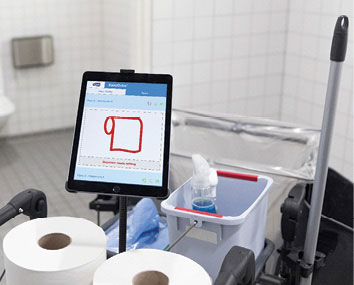
It is important to ensure dispensers remain stocked throughout busy periods. Run-outs can be difficult for staff to predict, particularly in the washroom of a busy venue. However, a digital system that ‘connects’ the washrooms removes the guesswork and allows cleaners to stay ahead of demand.
STAYING IN OPERATION
 Some seaside resorts are proving resourceful in keeping their public washrooms in operation. For example, a café proprietor in Pembrokeshire has taken on the lease of the toilets at his local Newgale beach and plans to run them himself.
The public urination row at Hemsby Beach has led to Great Yarmouth Borough Council deciding to reopen the toilets, while Cornwall’s Praa Sands facilities have also reopened and are now being run by a group of volunteers.
Seaside toilets and public washrooms in general are a vital facility and their closure can have devastating effects. Hopefully this summer there will public toilets provided at every seaside resort to help to boost tourism and ensure that a happy and relaxed holiday is had by everyone.