 FMJ Facilities Management magazine providing industry-specific intelligence to FM and property professionals

Coffee is a strategic workplace asset that is helping workplaces earn their people back, argue Maxime Herbaut Head of Brand & Customer Experience at Cimbali Group UK and Russell Cowley, General Manager of FreshGround
MAXIME HERBAUT HEAD OF BRAND & CUSTOMER EXPERIENCE AT CIMBALI GROUP UK
“Hybrid working, flexible schedules, and the rise of coworking environments have reshaped what employees expect from the office. Today, organisations are no longer just competing for attendance, but for attention, engagement, and experience.
One of the most effective ways to meet these expectations is through coffee. Once treated as a basic utility, coffee is now central to the office experience. Recent research from OnePoll, conducted among on-site employees, reveals that nearly half consider free beverages the top perk influencing their decision to work from the office, a statistic which underscores coffee’s role as a key driver of office attendance.
As consumers grow accustomed to premium coffee in cafés and even invest in high-quality machines at home, expectations in the workplace have risen in parallel. Employees no longer accept subpar coffee at work, they expect the same level of quality, if not better. For organisations, this means rethinking coffee not as an operational cost, but as a strategic asset.
GOOD COFFEE EXPERIENCE
Organisations often treat workplace coffee as a checkbox rather than an experience, but employees immediately recognise the difference, and it matters.
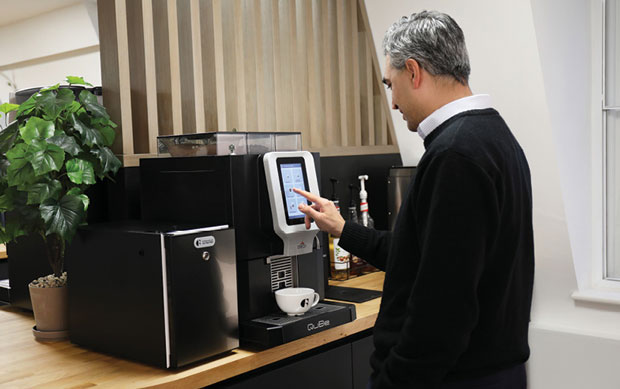
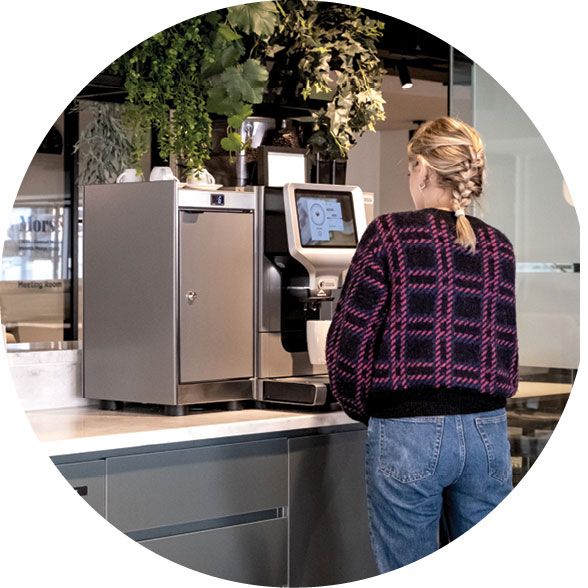
Investing in the right equipment is the first step. Modern bean-to-cup machines allow businesses to deliver consistently high-quality coffee without requiring barista expertise. Machines should be designed specifically for the purpose of bringing together performance, reliability and simplicity to best serve the demands of the modern workplace.
But it’s not just about the machine. The experience should include:
- A variety of coffee options.
- Alternative milk choices.
- Different strength and roast profiles.
- A consistent and intuitive user experience.
Offering choice is essential. Employees today expect a level of personalisation that mirrors the high-end café experience. Meeting this expectation demonstrates attention to detail and a genuine investment in employee satisfaction.
CULTURE BUILDER
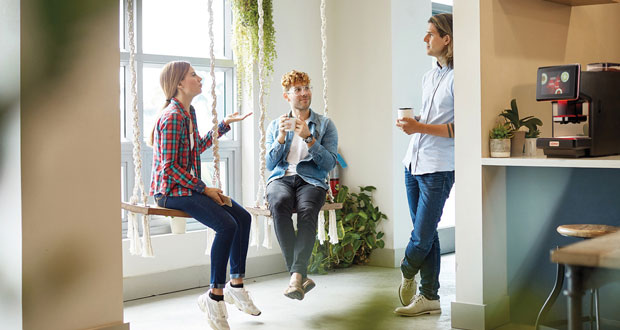
In a hybrid working world where spontaneous interactions are less frequent, organisations need to create intentional opportunities for connection. The coffee station naturally fulfils this role. It becomes a gathering point, an informal space where conversations happen, ideas are exchanged, and relationships are built. Organisations should design coffee areas with this in mind. Rather than treating them as functional corners, they should be positioned and designed as social spaces. When supported by high-quality coffee, these areas become a visible expression of company culture.
A well-executed coffee offering also reinforces brand perception and identity. Clients and employees alike associate the quality of coffee with the quality of the organisation.
COFFEE AT THE CORE
For facilities managers, coffee is now a core operational consideration, so when selecting a coffee solution, FMs should prioritise:
- Ease of use to minimise training requirements.
- Consistent performance to reduce downtime.
- Reliable servicing and support.
- Seamless integration into daily operations.
Modern solutions are designed with these needs in mind, helping facilities teams deliver consistent quality without added complexity. This allows teams to focus on the broader workplace experience rather than ongoing maintenance challenges.
Sustainability is also key. Modern coffee solutions can support environmental goals through energy-efficient operation, responsible sourcing, and reduced waste. Aligning coffee with sustainability not only supports corporate responsibility targets but also reinforces a company’s commitment to wellbeing and ethical practices.
When done correctly, coffee becomes a high-impact, low-effort investment, one that enhances both employee experience and operational efficiency.”
RUSSELL COWLEY, GENERAL MANAGER OF FRESHGROUND
 “Hybrid working has become the norm for UK commuters, with employees typically attending in person two to three days per week. If coming into the office is an active decision, then the experience must justify the time, cost and effort involved, by creating an environment that adds genuine value to the working day.
At FreshGround, we’re seeing a growing emphasis on spaces that support collaboration and social interaction. Aligning team schedules so colleagues are in at the same time is part of this, but increasingly, it’s the everyday experience that makes the difference – particularly when it comes to hospitality.
Food, drink and social spaces were once considered perks. Today, they are becoming central to how employees experience the workplace, and they can transform the office from somewhere people have to be into somewhere they want to be.
YOU DON’T HAVE TO STEP OUT
For decades, the high street has played a key role in working life. Grabbing a coffee from a favourite café, stepping out for lunch, or meeting colleagues informally outside the office all contributed to the rhythm of the day.
But that dynamic is changing, and increasingly, employees don’t have to step out to access those experiences – which presents a great opportunity for employers. By bringing high-quality hospitality into the workplace, by mirroring the high street experience, organisations can recreate the energy, choice and social connection traditionally found outside the office.
This is particularly relevant in the current economic climate, and according to Lumina Intelligence’s Menu Tracker (March 2025), the average price of coffee across UK coffee, sandwich and bakery chains has risen by 17 per cent since 2022. For employees already weighing up the cost of commuting, these additional expenses can quickly add up. Providing high-quality, accessible food and drink options in the workplace provides speed and convenience and helps ease that financial burden of coming into the office.
BALANCING COST AND EXPERIENCE
What’s also become evident in recent years is the issue of financial equity. Those on higher incomes or living closer to city centres are often better placed to absorb these expenses, while more junior employees or those living further out may feel the impact more acutely. So, to make it ‘worth the commute’, the experience must be personal, and financially beneficial.
RAISING THE BAR FOR THE OFFICE
For a generation entering the workforce post-pandemic, particularly Gen Z, there is no pre-existing benchmark for office life. Their expectations are being shaped now, making it even more important to get the experience right.
By bringing elements of the high street indoors – particularly through high-quality food, drink and social spaces, employers have a wonderful opportunity to redefine what the workplace offers. Ultimately, if the office can deliver an experience that supports connection, reduces friction, offers convenient refreshment needs and enhances the working day, it earns the commute.”