 FMJ Facilities Management magazine providing industry-specific intelligence to FM and property professionals

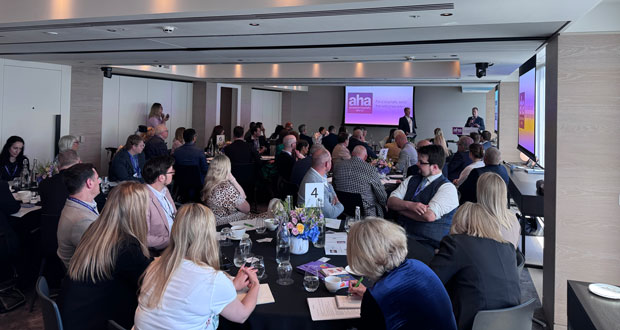
Hospitality businesses are missing significant commercial opportunities by treating accessibility as a compliance exercise rather than a strategic business priority, according to senior leaders gathered at the latest Accessible Hospitality Alliance (aha) forum.
Bringing together operators, employers, suppliers and accessibility specialists from across the hospitality sector, the event explored how businesses can create more inclusive environments for both guests and employees while unlocking access to one of the UK’s estimated £274 billion Purple Pound (the combined annual spending power of disabled people and their households) market.
A key conclusion from the forum was that accessibility should be afforded the same level of attention, investment and accountability as sustainability, moving beyond regulatory obligations to become a core part of business strategy.
Delegates argued that sustainability has successfully evolved from a compliance issue into a boardroom priority, supported by clear targets, reporting frameworks and increasing visibility across booking platforms and consumer decision making. Accessibility, they said, must now follow the same path.
Robin Sheppard, Chair and Co-Founder of the Accessible Hospitality Alliance, said: “Too many organisations still view accessibility through the lens of compliance when they should be viewing it through the lens of opportunity.
“The hospitality industry has shown through sustainability that when something is measured, reported and prioritised, meaningful change follows. Accessibility deserves the same level of strategic attention.
“When businesses create genuinely accessible environments, they are not simply meeting an obligation. They are opening their doors to more guests, attracting new customers and creating better experiences for everyone.”
Discussion during the forum highlighted the scale of the opportunity available to hospitality businesses, with delegates noting that disabled people and their households represent one of the UK’s largest consumer markets.
The forum also heard that 95 per cent of hotels are currently accessible to no more than 75 per cent of the population, highlighting the scale of the market that remains underserved.
Delegates discussed how many businesses continue to focus on meeting minimum accessibility requirements rather than recognising accessibility as a driver of revenue, customer loyalty and long term growth.
Participants also highlighted the need for the industry to rethink how accessibility is presented and communicated. The forum heard that 83 per cent of able-bodied guests perceive accessible rooms as a downgrade, while 43 per cent refuse an accessible room altogether and 40 per cent request an alternative room, reinforcing the need to position accessibility as an enhancement rather than a compromise.
Delegates also questioned why sustainability credentials are increasingly measured and promoted across booking platforms while accessibility information often remains inconsistent, difficult to find or absent altogether.
Many argued that introducing clearer accessibility standards, benchmarking and visibility would help drive improvement across the sector in much the same way sustainability reporting has over the last decade.
Suggestions emerging from the discussions included the development of accessibility ratings, improved accessibility information on websites and booking platforms, greater transparency around facilities and services, and stronger industry collaboration to share best practice.
Stephen Maley, Founder of SPM Consults, said: “The opportunity is often hiding in plain sight. Many hospitality businesses already offer facilities, services or environments that are accessible to a wide range of guests, but they fail to communicate them effectively.
“Accessibility isn’t about creating a one size fits all solution. It’s about providing clear information, being transparent about what you offer and giving people the confidence to book. Businesses that do that well will attract new customers, build loyalty and gain a competitive advantage.”
Roundtable discussions also explored the role of leadership, workplace culture and training in creating lasting change, with delegates agreeing that accessibility must become embedded throughout the guest and employee journey rather than being treated as a standalone initiative.
Other recommendations emerging from the event included increased investment in accessibility training, greater engagement with disabled consumers and employees, the use of accessibility guides and virtual tours, the appointment of accessibility champions within organisations, and stronger collaboration across the hospitality sector to accelerate progress.
The forum concluded that accessibility should no longer be viewed solely as a legal requirement, but as a commercial opportunity capable of helping businesses attract new customers, access new talent pools and strengthen their competitive position.
Sheppard added: “The industry has spent the last decade proving that sustainability can deliver both purpose and profit. Accessibility is the next frontier.
“Businesses that embrace it early will not only create better experiences for guests and employees, they will gain a competitive advantage in a market that is too often overlooked.”